Dacite
A variety of Igneous

What is Dacite?
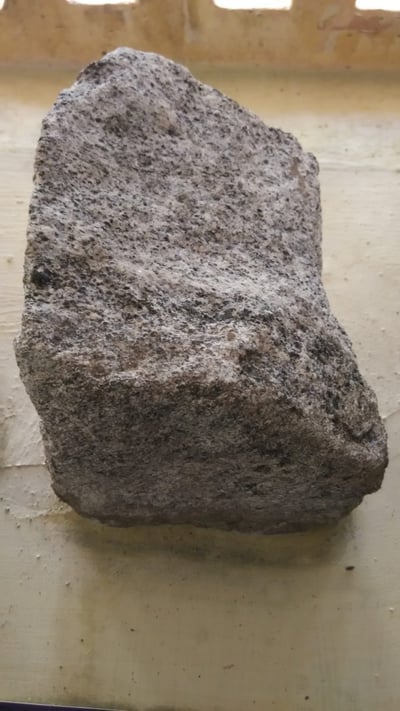
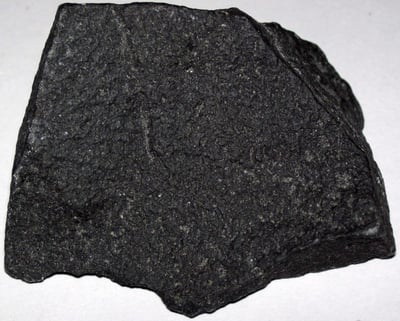
Dacite is a relatively common volcanic rock that can be found in several different hues. Ancient people sometimes used dacite in place of flint to create spears or arrowheads. The rock’s name is derived from “Dacia”, the ancient Roman province near modern Romania, where it was first described. Today, the stone is crushed and used as filler in construction projects.
Uses & Applications
Dacite can be used as a filler rock when paving and constructing roads, though it is not a popular choice due to its high silica content that may easily damage or weather. It may also be used for decorative purposes or stone carvings.
Market Value Factors
Pricing varies for every rock and mineral, so use these universal factors to gauge Dacite before comparing listings or appraisals.
Size & Weight
Larger, intact specimens usually command higher prices.
Rarity & Demand
Scarce material or popular varieties sell at a premium.
Condition & Finish
Chips, repairs, and heavy wear lower value; clean prep helps.
Treatment & Provenance
Untreated specimens with documented locality are prized.
Dacite Localities Map
See where Dacite is found with a localities map, collecting zones, and geology context. Generate a sample map preview below.
Key Characteristics
Formation of Dacite
Dacite usually forms as an intrusive rock such as a dike or sill. Examples of this type of dacite outcrop are found in northwestern Montana and northeastern Bulgaria. Nevertheless, because of the moderately high silica content, dacitic magma is quite viscous and therefore prone to explosive eruption. A notorious example of this is Mount St. Helens in which dacite domes formed from previous eruptions. Pyroclastic flows may also be of dacitic composition as is the case with the Fish Canyon Tuff of La Garita Caldera.
Composition of Dacite
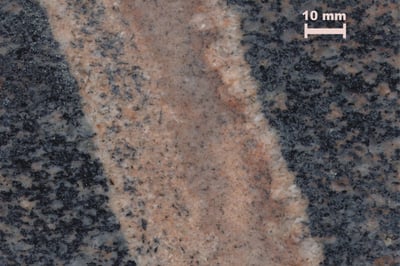
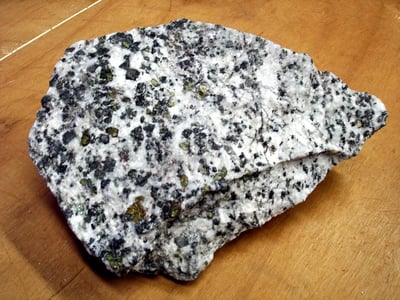
Dacite consists mostly of plagioclase feldspar with biotite, hornblende, and pyroxene (augite and/or enstatite). It has quartz as some rounded, corroded phenocrysts, or as an element of the ground-mass.
More Images

Quick Facts
Physical Properties
- Color
- Bluish-grey, brown, light to dark grey, white, yellow, etc.
- Hardness (Mohs)
- 6 - 7
- Density
- 2.5 - 2.8 g/cm³
Chemical Properties
Identify Dacite Instantly
- Snap a photo, get instant results
- 6,700+ rocks, minerals & crystals
- Discover collecting spots near you
Dacite FAQs
How do I identify Dacite?
Dacite can be identified by its hardness of 6 - 7 on the Mohs scale, Bluish-grey color. Look for these key characteristics when examining specimens.
What color is Dacite?
Dacite typically appears in Bluish-grey, brown, light to dark grey, white, yellow, etc.. Color can vary depending on impurities and formation conditions.
How hard is Dacite?
Dacite has a hardness of 6 - 7 on the Mohs scale. This gives it moderate hardness.
What is the formation of dacite of Dacite?
Dacite usually forms as an intrusive rock such as a dike or sill. Examples of this type of dacite outcrop are found in northwestern Montana and northeastern Bulgaria. Nevertheless, because of the moderately high silica content, dacitic magma is quite viscous and therefore prone to explosive eruption. A notorious example of this is Mount St. Helens in which dacite domes formed from previous eruptions. Pyroclastic flows may also be of dacitic composition as is the case with the Fish Canyon Tuff of La Garita Caldera.
What is the composition of dacite of Dacite?
Dacite consists mostly of plagioclase feldspar with biotite, hornblende, and pyroxene (augite and/or enstatite). It has quartz as some rounded, corroded phenocrysts, or as an element of the ground-mass.