Andesite
A variety of Igneous
What is Andesite?
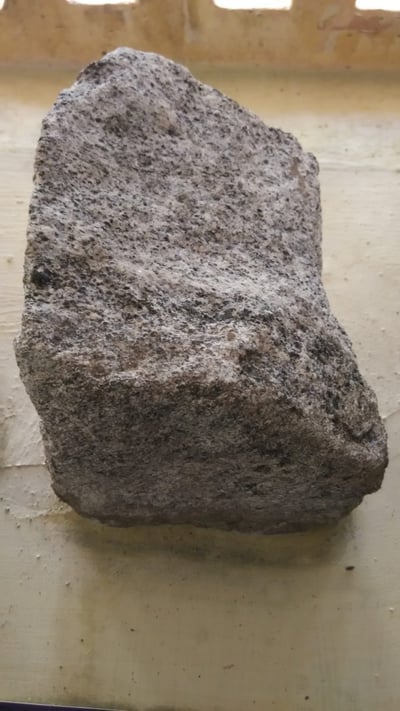
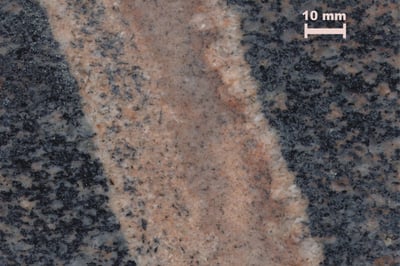
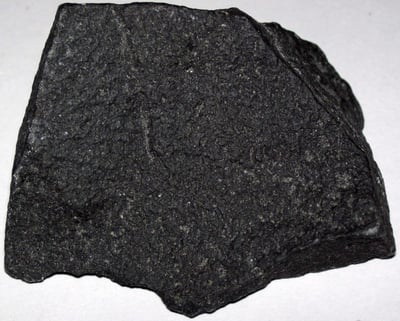
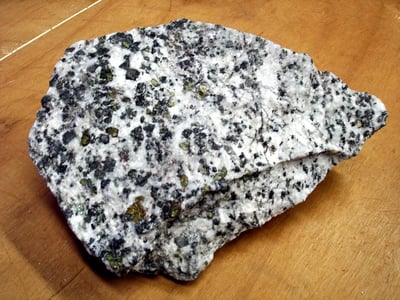
Andesite is a volcanic stone that, although found around the world, is most prevalent in the Andes Mountains (thus its name). Sporting a speckled grey or blue-grey appearance, andesite is sometimes used to make decorative tiles, statues, or stone garden features. It has few industrial uses, occasionally being used as a filler.
Uses & Applications
Andesite may be used as an aggregate filler material, though it is not an ideal choice due to its high silica content. Andesite often forms closely with copper, and the discovery of this rock in certain areas can be used as a marker to further locate more valuable copper deposits.
Discover Values
Market Value Factors
Pricing varies for every rock and mineral, so use these universal factors to gauge Andesite before comparing listings or appraisals.
Size & Weight
Larger, intact specimens usually command higher prices.
Rarity & Demand
Scarce material or popular varieties sell at a premium.
Condition & Finish
Chips, repairs, and heavy wear lower value; clean prep helps.
Treatment & Provenance
Untreated specimens with documented locality are prized.
Andesite Localities Map
See where Andesite is found with a localities map, collecting zones, and geology context. Generate a sample map preview below.
Key Characteristics
Formation of Andesite
Andesite is typically formed at convergent plate margins but may also occur in other tectonic settings. Intermediate volcanic rocks are created via several processes: Fractional crystallization of a mafic parent magma. Partial melting of crustal material. Magma mixing between felsic rhyolitic and mafic basaltic magmas in a magma reservoir Partial melting of metasomatized mantle.
Quick Facts
Physical Properties
- Color
- Variable, typically bluish-gray, gray, black
- Hardness (Mohs)
- 7
- Density
- 2.11 - 2.36 g/cm³
Chemical Properties
Identify Andesite Instantly
- Snap a photo, get instant results
- 6,700+ rocks, minerals & crystals
- Discover collecting spots near you
Andesite FAQs
How do I identify Andesite?
Andesite can be identified by its hardness of 7 on the Mohs scale, Variable color. Look for these key characteristics when examining specimens.
What color is Andesite?
Andesite typically appears in Variable, typically bluish-gray, gray, black. Color can vary depending on impurities and formation conditions.
How hard is Andesite?
Andesite has a hardness of 7 on the Mohs scale. This makes it a relatively hard mineral suitable for jewelry.
What is the formation of andesite of Andesite?
Andesite is typically formed at convergent plate margins but may also occur in other tectonic settings. Intermediate volcanic rocks are created via several processes: Fractional crystallization of a mafic parent magma. Partial melting of crustal material. Magma mixing between felsic rhyolitic and mafic basaltic magmas in a magma reservoir Partial melting of metasomatized mantle.