Greywacke
A variety of Sedimentary

What is Greywacke?
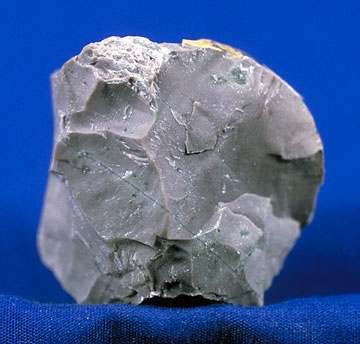
Greywacke is a hard, dark-colored variety of sandstone sometimes used as a filler in construction. Taking on a subdued but attractive look when cut or polished, greywacke is sometimes used for flooring, decorative tiles, or flagstones. It may also be used in roads or seawalls.
Uses & Applications
Greywacke is very hard, making it a prime candidate for construction materials, particularly walls and flooring, or as aggregate material for road paving. It has also be used as armor rock for sea walls, as well as ornamental stones in gardens.
Market Value Factors
Pricing varies for every rock and mineral, so use these universal factors to gauge Greywacke before comparing listings or appraisals.
Size & Weight
Larger, intact specimens usually command higher prices.
Rarity & Demand
Scarce material or popular varieties sell at a premium.
Condition & Finish
Chips, repairs, and heavy wear lower value; clean prep helps.
Treatment & Provenance
Untreated specimens with documented locality are prized.
Greywacke Localities Map
See where Greywacke is found with a localities map, collecting zones, and geology context. Generate a sample map preview below.
Key Characteristics
Clasts of Greywacke
Quartz, lithics, minor feldspar ( orthoclase, plagioclase), pyroxene ( augite), mica (biotite, chlorite, muscovite); often quartz veins visible
More Images

Quick Facts
Physical Properties
- Color
- Gray to black, brown, yellow, etc.
- Hardness (Mohs)
- 6 - 7
- Density
- 2.6 - 2.61 g/cm³
Identify Greywacke Instantly
- Snap a photo, get instant results
- 6,700+ rocks, minerals & crystals
- Discover collecting spots near you
Greywacke FAQs
How do I identify Greywacke?
Greywacke can be identified by its hardness of 6 - 7 on the Mohs scale, Gray to black color. Look for these key characteristics when examining specimens.
What color is Greywacke?
Greywacke typically appears in Gray to black, brown, yellow, etc.. Color can vary depending on impurities and formation conditions.
How hard is Greywacke?
Greywacke has a hardness of 6 - 7 on the Mohs scale. This gives it moderate hardness.
What is the clasts of greywacke of Greywacke?
Quartz, lithics, minor feldspar ( orthoclase, plagioclase), pyroxene ( augite), mica (biotite, chlorite, muscovite); often quartz veins visible