Gneiss
A variety of Metamorphic

What is Gneiss?
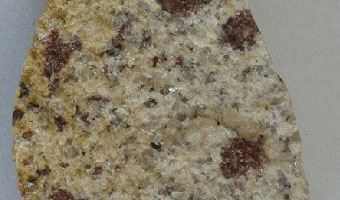
Both igneous and sedimentary rocks may be metamorphosed to form gneiss, pronounced “nice,” which is formed at very high temperatures and pressures. Often sporting beautiful bands or wave patterns, gneiss can be cut and polished to be used for ornamental stones, tiles, gravestones, and flooring.
Etymology & Origins
The word gneiss has been used in English since at least 1757. It is borrowed from the German word Gneis, formerly also spelled Gneiss, which is probably derived from the Middle High German noun gneist "spark" (so called because the rock glitters).
Uses & Applications
Gneiss is very strong, durable, and beautiful when polished, making it a popular choice for home interiors, particularly countertops and ornamental stones, including tombstones. It can also been seen in flooring, pillars, and walls. Gneiss may also be polished and used in jewelry.
Discover Values
Market Value Factors
Pricing varies for every rock and mineral, so use these universal factors to gauge Gneiss before comparing listings or appraisals.
Size & Weight
Larger, intact specimens usually command higher prices.
Rarity & Demand
Scarce material or popular varieties sell at a premium.
Condition & Finish
Chips, repairs, and heavy wear lower value; clean prep helps.
Treatment & Provenance
Untreated specimens with documented locality are prized.
Gneiss Localities Map
See where Gneiss is found with a localities map, collecting zones, and geology context. Generate a sample map preview below.
Key Characteristics
Rock Types of Gneiss
Augen gneiss Augen gneiss, from the German: Augen [ˈaʊɡən], meaning "eyes", is a coarse-grained gneiss resulting from metamorphism of granite, which contains characteristic elliptic or lenticular shear-bound feldspar porphyroclasts, normally microcline, within the layering of the quartz, biotite and magnetite bands. Henderson gneiss Henderson gneiss is found in North Carolina and South Carolina, US, east of the Brevard Shear Zone. It has deformed into two sequential forms. The second, more warped, form is associated with the Brevard Fault, and the first deformation results from displacement to the southwest. Lewisian gneiss Most of the Outer Hebrides of Scotland have a bedrock formed from Lewisian gneiss. In addition to the Outer Hebrides, they form basement deposits on the Scottish mainland west of the Moine Thrust and on the islands of Coll and Tiree. These rocks are largely igneous in origin, mixed with metamorphosed marble, quartzite and mica schist with later intrusions of basaltic dikes and granite magma. Archean and Proterozoic gneiss Gneisses of Archean and Proterozoic age occur in the Baltic Shield.
Formation of Gneiss
Gneiss is formed from sedimentary or igneous rock exposed to temperatures greater than 320 °C and relatively high pressure.
Composition of Gneiss
Gneissic rocks are usually medium- to coarse-foliated; they are largely recrystallized but do not carry large quantities of micas, chlorite or other platy minerals. Gneisses that are metamorphosed igneous rocks or their equivalent are termed granite gneisses, diorite gneisses, and so forth. Gneiss rocks may also be named after a characteristic component such as garnet gneiss, biotite gneiss, albite gneiss, and so forth. Orthogneiss designates a gneiss derived from an igneous rock, and paragneiss is one from a sedimentary rock. Gneissose rocks have properties similar to gneiss.
More Images


Quick Facts
Physical Properties
- Color
- Gray, pink, white, black, brown, red etc., alternating darker and lighter colored bands
- Hardness (Mohs)
- 5 - 7
- Density
- 2.6 - 2.9 g/cm³
Identify Gneiss Instantly
- Snap a photo, get instant results
- 6,700+ rocks, minerals & crystals
- Discover collecting spots near you
Gneiss FAQs
How do I identify Gneiss?
Gneiss can be identified by its hardness of 5 - 7 on the Mohs scale, Gray color. Look for these key characteristics when examining specimens.
What color is Gneiss?
Gneiss typically appears in Gray, pink, white, black, brown, red etc., alternating darker and lighter colored bands. Color can vary depending on impurities and formation conditions.
How hard is Gneiss?
Gneiss has a hardness of 5 - 7 on the Mohs scale. This gives it moderate hardness.
What is the rock types of gneiss of Gneiss?
Augen gneiss Augen gneiss, from the German: Augen [ˈaʊɡən], meaning "eyes", is a coarse-grained gneiss resulting from metamorphism of granite, which contains characteristic elliptic or lenticular shear-bound feldspar porphyroclasts, normally microcline, within the layering of the quartz, biotite and magnetite bands. Henderson gneiss Henderson gneiss is found in North Carolina and South Carolina, US, east of the Brevard Shear Zone. It has deformed into two sequential forms. The second, more warped, form is associated with the Brevard Fault, and the first deformation results from displacement to the southwest. Lewisian gneiss Most of the Outer Hebrides of Scotland have a bedrock formed from Lewisian gneiss. In addition to the Outer Hebrides, they form basement deposits on the Scottish mainland west of the Moine Thrust and on the islands of Coll and Tiree. These rocks are largely igneous in origin, mixed with metamorphosed marble, quartzite and mica schist with later intrusions of basaltic dikes and granite magma. Archean and Proterozoic gneiss Gneisses of Archean and Proterozoic age occur in the Baltic Shield.
What is the formation of gneiss of Gneiss?
Gneiss is formed from sedimentary or igneous rock exposed to temperatures greater than 320 °C and relatively high pressure.
What is the composition of gneiss of Gneiss?
Gneissic rocks are usually medium- to coarse-foliated; they are largely recrystallized but do not carry large quantities of micas, chlorite or other platy minerals. Gneisses that are metamorphosed igneous rocks or their equivalent are termed granite gneisses, diorite gneisses, and so forth. Gneiss rocks may also be named after a characteristic component such as garnet gneiss, biotite gneiss, albite gneiss, and so forth. Orthogneiss designates a gneiss derived from an igneous rock, and paragneiss is one from a sedimentary rock. Gneissose rocks have properties similar to gneiss.