Whitlockite
A variety of Minerals
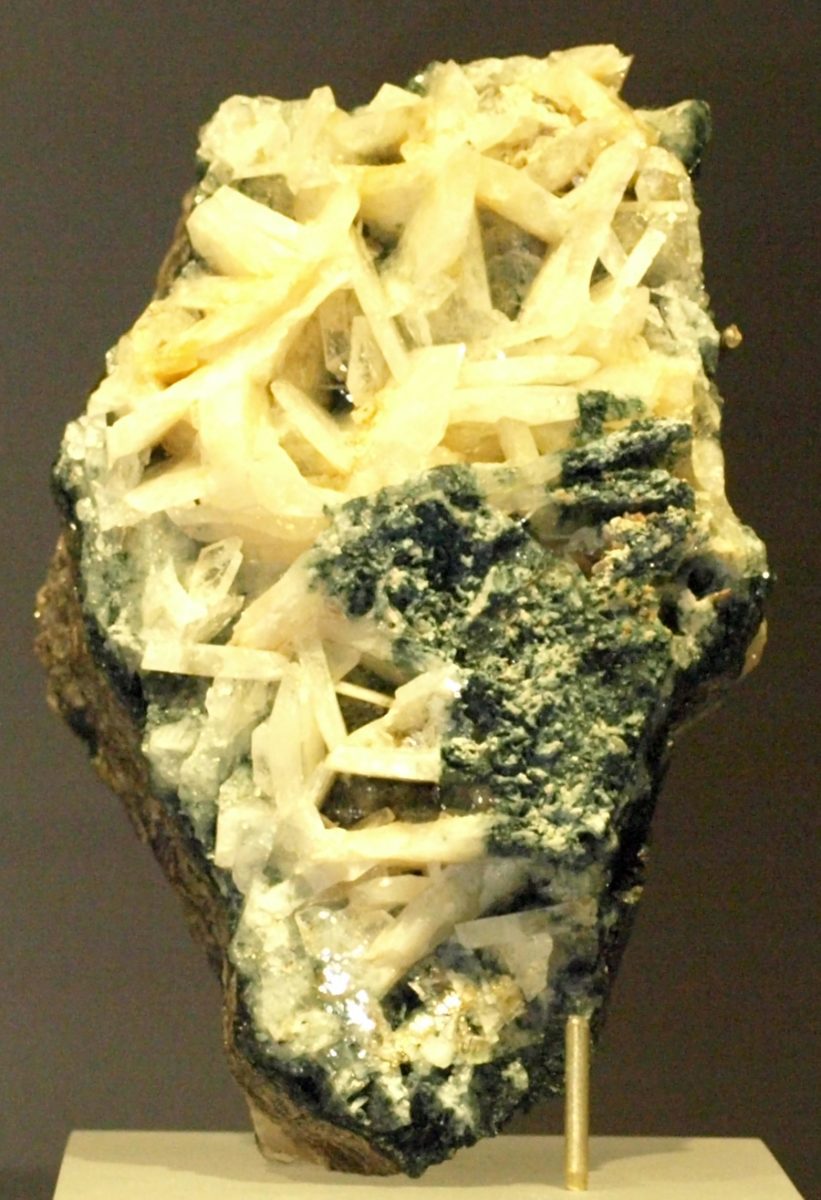
What is Whitlockite?
Whitlockite is a mineral, an unusual form of calcium phosphate. Its formula is Ca9(MgFe)(PO4)6PO3OH. It is a relatively rare mineral but is found in granitic pegmatites, phosphate rock deposits, guano caves and in chondrite meteorites. It was first described in 1941 and named for Herbert Percy Whitlock (1868–1948), American mineralogist, Curator, American Museum of Natural History, New York City, NY, US. With regards to periodontal dentistry, magnesium whitlockite comprises one component of many of the inorganic content of calculus. It is found primarily in subgingival calculus (as opposed to supragingival calculus). It is also found more in posterior as opposed to anterior regions of the oral cavity.
Optical Properties
- Optical Character
- Uniaxial negative
Market Value Factors
Pricing varies for every rock and mineral, so use these universal factors to gauge Whitlockite before comparing listings or appraisals.
Size & Weight
Larger, intact specimens usually command higher prices.
Rarity & Demand
Scarce material or popular varieties sell at a premium.
Condition & Finish
Chips, repairs, and heavy wear lower value; clean prep helps.
Treatment & Provenance
Untreated specimens with documented locality are prized.
Whitlockite Localities Map
See where Whitlockite is found with a localities map, collecting zones, and geology context. Generate a sample map preview below.
Key Characteristics
Characteristics of Whitlockite
Each of the phases of whitlockite described above exhibit approximately the same physical properties. They display no cleavage, fracture subconchoidal to uneven, and tend to be brittle. They are classified with a hardness of 5 and a density of 3.12 g/cm. Color varieties are colorless, white, gray, yellowish or pinkish, and can be transparent to translucent. Whitlockites exhibit a vitreous to resinous luster. The typical habit of whitlockite is rhombohedral crystals, but whitlockite can also rarely be tabular. The crystal habit of whitlockite also ranges from coarse granular to earthy.
Quick Facts
Physical Properties
- Color
- Colourless, grey-white, light pink, light yellow, colourless in transmitted light.
- Hardness (Mohs)
- 5
- Density
- 3.102 g/cm³
- Streak
- White
Chemical Properties
- Chemical Formula
- Ca9Mg(PO4)6(PO3OH)
- Elements
- Ca, H, Mg, O, P
Also Known As

Identify Whitlockite Instantly
- Snap a photo, get instant results
- 6,700+ rocks, minerals & crystals
- Discover collecting spots near you
Whitlockite FAQs
How do I identify Whitlockite?
Whitlockite can be identified by its hardness of 5 on the Mohs scale, Colourless color. Look for these key characteristics when examining specimens.
What color is Whitlockite?
Whitlockite typically appears in Colourless, grey-white, light pink, light yellow, colourless in transmitted light.. Color can vary depending on impurities and formation conditions.
How hard is Whitlockite?
Whitlockite has a hardness of 5 on the Mohs scale. This gives it moderate hardness.
What is the characteristics of whitlockite of Whitlockite?
Each of the phases of whitlockite described above exhibit approximately the same physical properties. They display no cleavage, fracture subconchoidal to uneven, and tend to be brittle. They are classified with a hardness of 5 and a density of 3.12 g/cm. Color varieties are colorless, white, gray, yellowish or pinkish, and can be transparent to translucent. Whitlockites exhibit a vitreous to resinous luster. The typical habit of whitlockite is rhombohedral crystals, but whitlockite can also rarely be tabular. The crystal habit of whitlockite also ranges from coarse granular to earthy.


%252FAbenakiite-(ce)-01.jpg&size=small)

