Wakabayashilite
A variety of Minerals
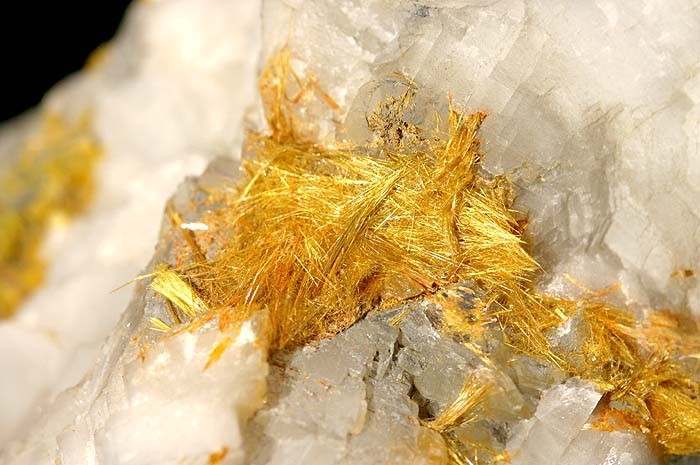
What is Wakabayashilite?
Wakabayashilite is a rare arsenic, antimony sulfide mineral with formula [(As,Sb)6S9][As4S5].
Market Value Factors
Pricing varies for every rock and mineral, so use these universal factors to gauge Wakabayashilite before comparing listings or appraisals.
Size & Weight
Larger, intact specimens usually command higher prices.
Rarity & Demand
Scarce material or popular varieties sell at a premium.
Condition & Finish
Chips, repairs, and heavy wear lower value; clean prep helps.
Treatment & Provenance
Untreated specimens with documented locality are prized.
Wakabayashilite Localities Map
See where Wakabayashilite is found with a localities map, collecting zones, and geology context. Generate a sample map preview below.
Key Characteristics
Formation of Wakabayashilite
Wakabayashilite is a rare mineral first discovered in Nevada in the 1920s, but it was mistaken for a hair orpiment. In the 1970s, wakabayashilite was found in Japan and scientifically identified as a new mineral. It was named after Yaichiro Wakabayashi (1874–1943), a Japanese mineralogist of the Mitsubishi Mining Company in Japan. Wakabayashilite has been discovered later in several places around the world such as in Saha Republic (Russia), Zhuang region (China) and Hautes-Alpes (France). In the United States, Wakabayashilite has been found at the White Caps Mine, in the Toquima Range of mountains, Nye County, Nevada. Other Nevada locations where the mineral has been found include the Getchel Mine, in the Osgood Mountains, Humboldt County, and at the Seminole-Regent Mine, in the Rawhide Mining District, Mineral County. Originally, Wakabayashilite was found in druses of quartz associated with orpiment and realgar, however, it was later found embedded in calcite as well. Generally, it mostly occurs with other arsenic minerals in high-arsenic gold deposits.
Quick Facts
Physical Properties
- Color
- Lemon-yellow to orange-yellow
- Hardness (Mohs)
- 1.5
- Density
- 4.06 g/cm³
- Streak
- Orange-yellow
Chemical Properties
- Chemical Formula
- [(As,Sb)6S9][As<sub>4</sub>S<sub>5</sub>]
- Elements
- As, S, Sb
Identify Wakabayashilite Instantly
- Snap a photo, get instant results
- 6,700+ rocks, minerals & crystals
- Discover collecting spots near you
Wakabayashilite FAQs
How do I identify Wakabayashilite?
Wakabayashilite can be identified by its hardness of 1.5 on the Mohs scale, Lemon-yellow to orange-yellow color. Look for these key characteristics when examining specimens.
What color is Wakabayashilite?
Wakabayashilite typically appears in Lemon-yellow to orange-yellow. Color can vary depending on impurities and formation conditions.
How hard is Wakabayashilite?
Wakabayashilite has a hardness of 1.5 on the Mohs scale. This makes it a soft mineral that can be scratched easily.
What is the formation of wakabayashilite of Wakabayashilite?
Wakabayashilite is a rare mineral first discovered in Nevada in the 1920s, but it was mistaken for a hair orpiment. In the 1970s, wakabayashilite was found in Japan and scientifically identified as a new mineral. It was named after Yaichiro Wakabayashi (1874–1943), a Japanese mineralogist of the Mitsubishi Mining Company in Japan. Wakabayashilite has been discovered later in several places around the world such as in Saha Republic (Russia), Zhuang region (China) and Hautes-Alpes (France). In the United States, Wakabayashilite has been found at the White Caps Mine, in the Toquima Range of mountains, Nye County, Nevada. Other Nevada locations where the mineral has been found include the Getchel Mine, in the Osgood Mountains, Humboldt County, and at the Seminole-Regent Mine, in the Rawhide Mining District, Mineral County. Originally, Wakabayashilite was found in druses of quartz associated with orpiment and realgar, however, it was later found embedded in calcite as well. Generally, it mostly occurs with other arsenic minerals in high-arsenic gold deposits.

%252FAbenakiite-(ce)-01.jpg&size=small)

