Turgite
What is Turgite?
Turgite is a term used to describe a mixture of hematite and goethite. This material is prized for its luminous, rainbow-like colors that appear when the material is seen from different angles. It is rarely seen tumbled or cut. The name Turgite comes from the Turginsk Mine in Russia, where it was first described.
Uses & Applications
Turgite has commercial and ornamental appeal due to its iridescence. This rainbow effect is so marked that small pieces of the raw ore are sold, sometimes mounted, to mineral collectors, and for display purposes. Examples are also sold after being cut and polished.
Healing Properties
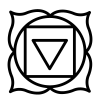
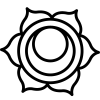
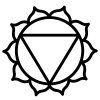
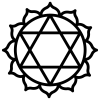
Turgite is supposed to turn any residing negativity into more positive energy. This stone is said to impact all the chakras and may allow you to convert your pessimistic thoughts into an optimistic perspective. It's believed that turgite enables better communication within the body and aids psychic interaction.
Market Value Factors
Pricing varies for every rock and mineral, so use these universal factors to gauge Turgite before comparing listings or appraisals.
Size & Weight
Larger, intact specimens usually command higher prices.
Rarity & Demand
Scarce material or popular varieties sell at a premium.
Condition & Finish
Chips, repairs, and heavy wear lower value; clean prep helps.
Treatment & Provenance
Untreated specimens with documented locality are prized.
Turgite Localities Map
See where Turgite is found with a localities map, collecting zones, and geology context. Generate a sample map preview below.
Associated Chakras

Quick Facts
Physical Properties
- Color
- Brown-red, iridescent
- Hardness (Mohs)
- 5 - 6
- Density
- 3.3 - 5.26 g/cm³
- Streak
- Blood-red
Chemical Properties
- Chemical Formula
- Fe2-x(OH)xO3-x
- Elements
- Fe, H, O
Also Known As
Identify Turgite Instantly
- Snap a photo, get instant results
- 6,700+ rocks, minerals & crystals
- Discover collecting spots near you
Turgite FAQs
How do I identify Turgite?
Turgite can be identified by its hardness of 5 - 6 on the Mohs scale, Brown-red color. Look for these key characteristics when examining specimens.
What color is Turgite?
Turgite typically appears in Brown-red, iridescent. Color can vary depending on impurities and formation conditions.
How hard is Turgite?
Turgite has a hardness of 5 - 6 on the Mohs scale. This gives it moderate hardness.