Trilithionite
A variety of Minerals
What is Trilithionite?
Lepidolite is a lilac-gray or rose-colored member of the mica group of minerals with chemical formula K(Li,Al)3(Al,Si,Rb)4O10(F,OH)2. It is the most abundant lithium-bearing mineral and is a secondary source of this metal. It is a phyllosilicate mineral and a member of the polylithionite-trilithionite series. Lepidolite is part of a three-part series consisting of polylithionite, lepidolite, and trilithionite. All three minerals share similar properties and are caused because of varying ratios of lithium and aluminum in their chemical formulas. The Li:Al ratio varies from 2:1 in polylithionite up to 1.5:1.5 in trilithionite. Lepidolite is found naturally in a variety of colors, mainly pink, purple, and red, but also gray and, rarely, yellow and colorless. Because lepidolite is a lithium-bearing mica, it is often wrongly assumed that lithium is what causes the pink hues that are so characteristic of this mineral. Instead, it is trace amounts of manganese that cause the pink, purple, and red colors. It is associated with other lithium-bearing minerals like spodumene in pegmatite bodies. It is one of the major sources of the rare alkali metals rubidium and caesium. In 1861, Robert Bunsen and Gustav Kirchhoff extracted 150 kg (330 lb) of lepidolite and yielded a few grams of rubidium salts for analysis, and therefore discovered the new element rubidium. It occurs in granite pegmatites, in some high-temperature quartz veins, greisens and granites. Associated minerals include quartz, feldspar, spodumene, amblygonite, tourmaline, columbite, cassiterite, topaz and beryl. Notable occurrences include Brazil; Ural Mountains, Russia; California, United States; Tanco Mine, Bernic Lake, Manitoba, Canada; and Madagascar.
Market Value Factors
Pricing varies for every rock and mineral, so use these universal factors to gauge Trilithionite before comparing listings or appraisals.
Size & Weight
Larger, intact specimens usually command higher prices.
Rarity & Demand
Scarce material or popular varieties sell at a premium.
Condition & Finish
Chips, repairs, and heavy wear lower value; clean prep helps.
Treatment & Provenance
Untreated specimens with documented locality are prized.
Trilithionite Localities Map
See where Trilithionite is found with a localities map, collecting zones, and geology context. Generate a sample map preview below.
Quick Facts
Physical Properties
- Color
- Pink-violet
Chemical Properties
- Chemical Formula
- K(Li1.5Al1.5)(AlSi3O10)(F,OH)2
- Elements
- Al, F, H, K, Li, O, Si
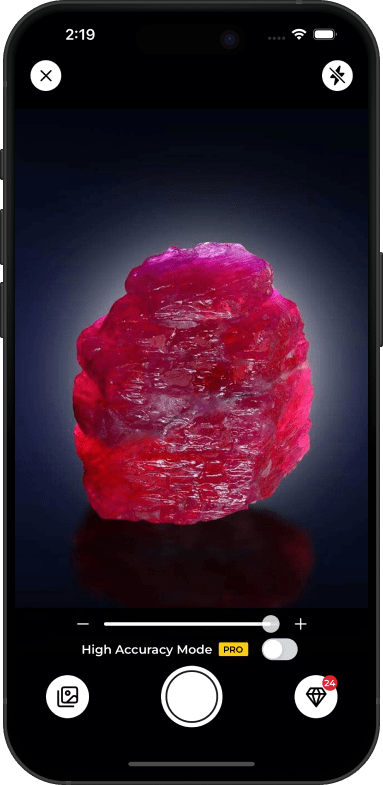
Identify Trilithionite Instantly
- Snap a photo, get instant results
- 6,700+ rocks, minerals & crystals
- Discover collecting spots near you
Trilithionite FAQs
How do I identify Trilithionite?
Trilithionite can be identified by its Pink-violet color. Look for these key characteristics when examining specimens.
What color is Trilithionite?
Trilithionite typically appears in Pink-violet. Color can vary depending on impurities and formation conditions.

%252FAbenakiite-(ce)-01.jpg&size=small)

