Talmessite
A variety of Minerals
What is Talmessite?
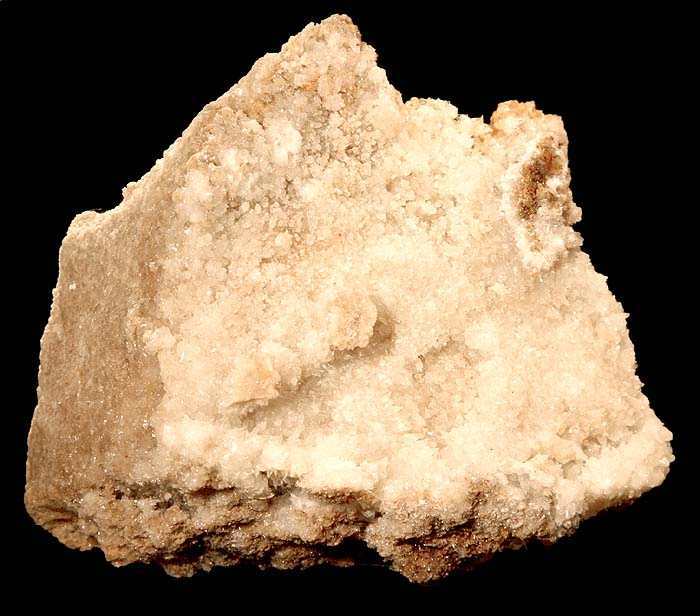
Talmessite is a hydrated calcium magnesium arsenate, often with significant amounts of cobalt or nickel. It was named in 1960 for the type locality, the Talmessi mine, Anarak district, Iran. It forms a series with β-Roselite, where cobalt replaces some of the magnesium, and with gaitite, where zinc replaces the magnesium. All these minerals are members of the fairfieldite group. Talmessite is dimorphic with wendwilsonite (which is not a member of this group).
Market Value Factors
Pricing varies for every rock and mineral, so use these universal factors to gauge Talmessite before comparing listings or appraisals.
Size & Weight
Larger, intact specimens usually command higher prices.
Rarity & Demand
Scarce material or popular varieties sell at a premium.
Condition & Finish
Chips, repairs, and heavy wear lower value; clean prep helps.
Treatment & Provenance
Untreated specimens with documented locality are prized.
Talmessite Localities Map
See where Talmessite is found with a localities map, collecting zones, and geology context. Generate a sample map preview below.
Key Characteristics
Characteristics of Talmessite
Talmessite is a moderately hard mineral, with Mohs hardness 5, harder than fluorite but not as hard as quartz. The specific gravity calculated from the formula and the cell dimensions is 3.49, but the measured value is less for ordinary talmessite, at 3.42 and more for the cobaltoan variety, at 3.57. The mineral displays polysynthetic twinning. It is not radioactive and it loses water of crystallisation at 450.
Appearance of Talmessite
Talmessite occurs as prismatic crystals to 3 mm, as radiating fibrous aggregates or as fine crystalline aggregates; it may also be stalactitic or in crusts. Pure talmessite is white or colourless, and colourless in transmitted light, but nickel-rich varieties are pale green and cobalt-rich varieties may be brownish, pink or the purple colour typical of many cobalt minerals. The streak is white and crystals are transparent to translucent with a vitreous lustre.
Formation of Talmessite
Talmessite is a rare secondary mineral formed typically in the oxidized zone of some hydrothermal mineral deposits, as an alteration product of realgar, orpiment, or Cu–Ni arsenides. Cobalt-rich varieties are found in the oxidised zone of cobalt arsenide deposits. It occurs associated with gaitite, erythrite, annabergite, picropharmacolite, pharmacolite, austinite, fluorite, baryte, aragonite, calcite and dolomite. At the type locality it is associated with aragonite and dolomite.
Quick Facts
Physical Properties
- Color
- White, colorless, translucent pale green (nickelian), brownish pink (cobaltian)
- Hardness (Mohs)
- 5
Chemical Properties
- Chemical Formula
- Ca2Mg(AsO4)2 · 2H2O
- Elements
- As, Ca, H, Mg, O
Also Known As
Identify Talmessite Instantly
- Snap a photo, get instant results
- 6,700+ rocks, minerals & crystals
- Discover collecting spots near you
Talmessite FAQs
How do I identify Talmessite?
Talmessite can be identified by its hardness of 5 on the Mohs scale, White color. Look for these key characteristics when examining specimens.
What color is Talmessite?
Talmessite typically appears in White, colorless, translucent pale green (nickelian), brownish pink (cobaltian). Color can vary depending on impurities and formation conditions.
How hard is Talmessite?
Talmessite has a hardness of 5 on the Mohs scale. This gives it moderate hardness.
What is the characteristics of talmessite of Talmessite?
Talmessite is a moderately hard mineral, with Mohs hardness 5, harder than fluorite but not as hard as quartz. The specific gravity calculated from the formula and the cell dimensions is 3.49, but the measured value is less for ordinary talmessite, at 3.42 and more for the cobaltoan variety, at 3.57. The mineral displays polysynthetic twinning. It is not radioactive and it loses water of crystallisation at 450.
What is the appearance of talmessite of Talmessite?
Talmessite occurs as prismatic crystals to 3 mm, as radiating fibrous aggregates or as fine crystalline aggregates; it may also be stalactitic or in crusts. Pure talmessite is white or colourless, and colourless in transmitted light, but nickel-rich varieties are pale green and cobalt-rich varieties may be brownish, pink or the purple colour typical of many cobalt minerals. The streak is white and crystals are transparent to translucent with a vitreous lustre.
What is the formation of talmessite of Talmessite?
Talmessite is a rare secondary mineral formed typically in the oxidized zone of some hydrothermal mineral deposits, as an alteration product of realgar, orpiment, or Cu–Ni arsenides. Cobalt-rich varieties are found in the oxidised zone of cobalt arsenide deposits. It occurs associated with gaitite, erythrite, annabergite, picropharmacolite, pharmacolite, austinite, fluorite, baryte, aragonite, calcite and dolomite. At the type locality it is associated with aragonite and dolomite.

%252FAbenakiite-(ce)-01.jpg&size=small)

