Suessite
A variety of Minerals
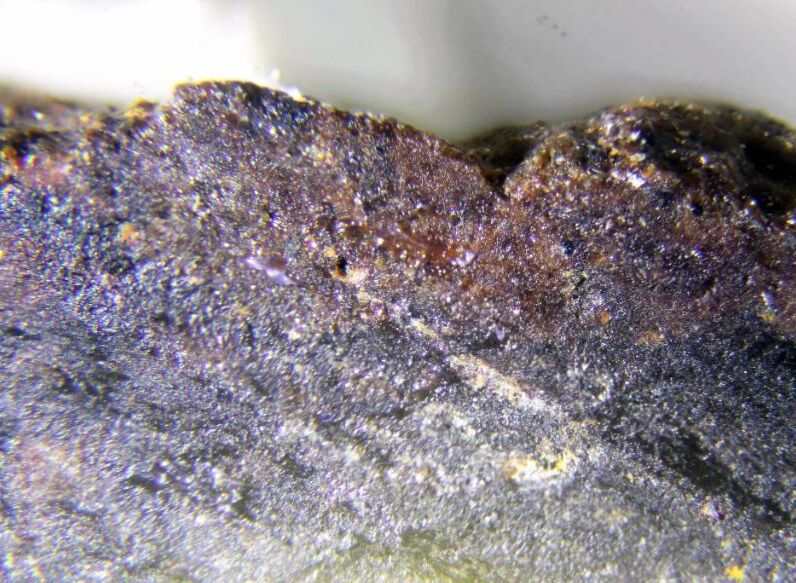
What is Suessite?
Suessite is a rare iron silicide mineral with chemical formula: Fe3Si. The mineral was named after Professor Hans E. Suess. It was discovered in 1982 during the chemical analysis of The North Haig olivine pigeonite achondrite (ureilite). It is a cream white color in reflected light, and ranges in size from 1 μm "blebs" to elongated grains that can reach up to 0.45 cm in length. This mineral belongs in the isometric crystal class. The isometric class has crystallographic axes that are all the same length and each of the three axes perpendicular to the other two. It is isotropic, has a structural type of DO3 and a crystal lattice of BiF3.
Market Value Factors
Pricing varies for every rock and mineral, so use these universal factors to gauge Suessite before comparing listings or appraisals.
Size & Weight
Larger, intact specimens usually command higher prices.
Rarity & Demand
Scarce material or popular varieties sell at a premium.
Condition & Finish
Chips, repairs, and heavy wear lower value; clean prep helps.
Treatment & Provenance
Untreated specimens with documented locality are prized.
Suessite Localities Map
See where Suessite is found with a localities map, collecting zones, and geology context. Generate a sample map preview below.
Key Characteristics
Characteristics of Suessite
Suessite is an isotropic mineral, Isotropism is defined as an optical property of a mineral that stays the same from whatever direction it is observed. In thin-section microscopy, an isotropic mineral has only one refractive index. This means that light that passes through the mineral is not split into two different directions, but it passes through unchanged. Suessite, as determined from the previous definition, only has one index of refraction. When Keil, Fuchs, and Berkley first discovered the mineral they described it as having a relatively low optical relief, but there was no determination of the index of refraction. In plane polarized light, suessite is a reddish-brown color that shows no pleochroism.
Quick Facts
Physical Properties
- Color
- Steel-gray
- Density
- 7.08 g/cm³
Chemical Properties
- Chemical Formula
- (Fe,Ni)3Si
- Elements
- Fe, Ni, Si
Identify Suessite Instantly
- Snap a photo, get instant results
- 6,700+ rocks, minerals & crystals
- Discover collecting spots near you
Suessite FAQs
How do I identify Suessite?
Suessite can be identified by its Steel-gray color. Look for these key characteristics when examining specimens.
What color is Suessite?
Suessite typically appears in Steel-gray. Color can vary depending on impurities and formation conditions.
What is the characteristics of suessite of Suessite?
Suessite is an isotropic mineral, Isotropism is defined as an optical property of a mineral that stays the same from whatever direction it is observed. In thin-section microscopy, an isotropic mineral has only one refractive index. This means that light that passes through the mineral is not split into two different directions, but it passes through unchanged. Suessite, as determined from the previous definition, only has one index of refraction. When Keil, Fuchs, and Berkley first discovered the mineral they described it as having a relatively low optical relief, but there was no determination of the index of refraction. In plane polarized light, suessite is a reddish-brown color that shows no pleochroism.

%252FAbenakiite-(ce)-01.jpg&size=small)

