Struvite
A variety of Minerals
What is Struvite?
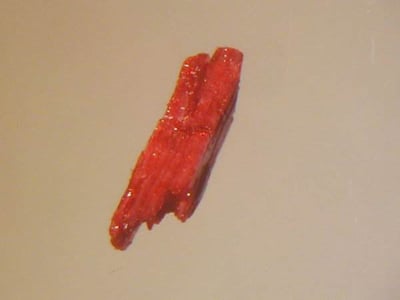
Struvite (magnesium ammonium phosphate) is a phosphate mineral with formula: NH4MgPO4·6H2O. Struvite crystallizes in the orthorhombic system as white to yellowish or brownish-white pyramidal crystals or in platey mica-like forms. It is a soft mineral with Mohs hardness of 1.5 to 2 and has a low specific gravity of 1.7. It is sparingly soluble in neutral and alkaline conditions, but readily soluble in acid. Struvite urinary stones and crystals form readily in the urine of animals and humans that are infected with ammonia-producing organisms. They are potentiated by alkaline urine and high magnesium excretion (high magnesium/plant-based diets). They also are potentiated by a specific urinary protein in domestic cats.
Uses & Applications
There is considerable interest in the utility of urine-derived struvite as a fertilizer in austere situations.
Market Value Factors
Pricing varies for every rock and mineral, so use these universal factors to gauge Struvite before comparing listings or appraisals.
Size & Weight
Larger, intact specimens usually command higher prices.
Rarity & Demand
Scarce material or popular varieties sell at a premium.
Condition & Finish
Chips, repairs, and heavy wear lower value; clean prep helps.
Treatment & Provenance
Untreated specimens with documented locality are prized.
Struvite Localities Map
See where Struvite is found with a localities map, collecting zones, and geology context. Generate a sample map preview below.
Key Characteristics
Formation of Struvite
Struvite is occasionally found in canned seafood, where its appearance is that of small glass slivers, objectionable to consumers for aesthetic reasons but of no health consequence. A simple test can differentiate struvite from glass. Use of struvite as an agricultural fertilizer was in fact first described in 1857.
Quick Facts
Physical Properties
- Color
- Colourless, white (dehydrated), yellow or brownish, light grey; colourless in transmitted light.
- Hardness (Mohs)
- 1.5 - 2
- Density
- 1.705 g/cm³
- Streak
- White
Chemical Properties
- Chemical Formula
- (NH4)Mg(PO4) · 6H2O
- Elements
- H, Mg, N, O, P
Also Known As
Identify Struvite Instantly
- Snap a photo, get instant results
- 6,700+ rocks, minerals & crystals
- Discover collecting spots near you
Struvite FAQs
How do I identify Struvite?
Struvite can be identified by its hardness of 1.5 - 2 on the Mohs scale, Colourless color. Look for these key characteristics when examining specimens.
What color is Struvite?
Struvite typically appears in Colourless, white (dehydrated), yellow or brownish, light grey; colourless in transmitted light.. Color can vary depending on impurities and formation conditions.
How hard is Struvite?
Struvite has a hardness of 1.5 - 2 on the Mohs scale. This makes it a soft mineral that can be scratched easily.
What is the formation of struvite of Struvite?
Struvite is occasionally found in canned seafood, where its appearance is that of small glass slivers, objectionable to consumers for aesthetic reasons but of no health consequence. A simple test can differentiate struvite from glass. Use of struvite as an agricultural fertilizer was in fact first described in 1857.

%252FAbenakiite-(ce)-01.jpg&size=small)

