Serrabrancaite
A variety of Minerals
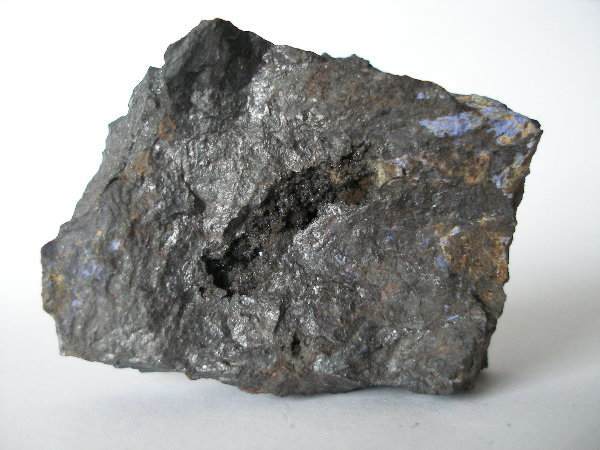
What is Serrabrancaite?
Serrabrancaite is a mineral with the chemical formula MnPO4•H2O and which is named for the locality where it was found, the Alto Serra Branca Pegmatite. The Alto Serra Branca mine has been in operation since the 1940s. It is located in Paraiba, Brazil near a village named Pedra Lavrada. Tantalite is the main mineral mined here. Specimens of serrabrancaite are kept in the Mineralogical Collections of both the Bergakademie Freiberg, Germany and the Martin-Luther Universität Halle, Institut für Geologische Wissenschaften.
Market Value Factors
Pricing varies for every rock and mineral, so use these universal factors to gauge Serrabrancaite before comparing listings or appraisals.
Size & Weight
Larger, intact specimens usually command higher prices.
Rarity & Demand
Scarce material or popular varieties sell at a premium.
Condition & Finish
Chips, repairs, and heavy wear lower value; clean prep helps.
Treatment & Provenance
Untreated specimens with documented locality are prized.
Serrabrancaite Localities Map
See where Serrabrancaite is found with a localities map, collecting zones, and geology context. Generate a sample map preview below.
Key Characteristics
Formation of Serrabrancaite
The Alto Serra Branca Mine occurs where a granitic pegmatite intruded upon a biotite schist. There are many minerals found within this pegmatite. The main constituents are quartz, muscovite, microcline, and albite and amblygonite are common in smaller quantities. The minerals apatite, beryl, uraninite, and elbaite along with the tantalite group and other secondary uranium minerals are found throughout the mine. Near the center of the open portion of the mine, there are growths of two phosphates: triphylite and triplite. Serrabrancaite and other minerals (purpurite, rockbridgeite, tavorite, barbosalite, hureaulite, eosphorite, and phosphosiderite) occur as alteration products of these two phosphates. Serrabrancaite is altered triplite that is closely associated with vernadite. There were also associations with carlhintzeite, colquiriite, pachnolite, ralstonite, and fluellite.
Composition of Serrabrancaite
A synthetic material was used as the standard for the X-ray diffraction (XRD) analysis. The synthetic standard had a unit cell with a= 6.912(1) Å; b= 7.470(1) Å; and c= 7.357 Å;, β= 112.29(3)°, and Z= 4. The standard is in the space group C2/c. The XRD analysis was run with a Siemens D5000 diffractometer using CuKɑ radiation and a secondary monochromator to collect the data. The data from the analysis showed that serrabrancaite has unit cell dimensions of a= 6.914(2) Å; b= 7.468(2) Å; and c= 7.364(2) Å;, β= 112.29°, and V= 351.8(1) Å. This puts serrabrancaite in the monoclinic crystal system and the point group C2/c after a structural analysis. Serrabrancaite's structure is built of chains of (MnO6)-octahedra that share their corners and run in the [101] direction. These chains are then held together by (PO4)-tetrahedra.
Quick Facts
Physical Properties
- Color
- Dark brown to dark greenish black
- Hardness (Mohs)
- 3.5
- Density
- 3.17 g/cm³
- Streak
- Olive-green
Chemical Properties
- Chemical Formula
- MnPO4 · H2O
- Elements
- H, Mn, O, P
Identify Serrabrancaite Instantly
- Snap a photo, get instant results
- 6,700+ rocks, minerals & crystals
- Discover collecting spots near you
Serrabrancaite FAQs
How do I identify Serrabrancaite?
Serrabrancaite can be identified by its hardness of 3.5 on the Mohs scale, Dark brown to dark greenish black color. Look for these key characteristics when examining specimens.
What color is Serrabrancaite?
Serrabrancaite typically appears in Dark brown to dark greenish black. Color can vary depending on impurities and formation conditions.
How hard is Serrabrancaite?
Serrabrancaite has a hardness of 3.5 on the Mohs scale. This gives it moderate hardness.
What is the formation of serrabrancaite of Serrabrancaite?
The Alto Serra Branca Mine occurs where a granitic pegmatite intruded upon a biotite schist. There are many minerals found within this pegmatite. The main constituents are quartz, muscovite, microcline, and albite and amblygonite are common in smaller quantities. The minerals apatite, beryl, uraninite, and elbaite along with the tantalite group and other secondary uranium minerals are found throughout the mine. Near the center of the open portion of the mine, there are growths of two phosphates: triphylite and triplite. Serrabrancaite and other minerals (purpurite, rockbridgeite, tavorite, barbosalite, hureaulite, eosphorite, and phosphosiderite) occur as alteration products of these two phosphates. Serrabrancaite is altered triplite that is closely associated with vernadite. There were also associations with carlhintzeite, colquiriite, pachnolite, ralstonite, and fluellite.
What is the composition of serrabrancaite of Serrabrancaite?
A synthetic material was used as the standard for the X-ray diffraction (XRD) analysis. The synthetic standard had a unit cell with a= 6.912(1) Å; b= 7.470(1) Å; and c= 7.357 Å;, β= 112.29(3)°, and Z= 4. The standard is in the space group C2/c. The XRD analysis was run with a Siemens D5000 diffractometer using CuKɑ radiation and a secondary monochromator to collect the data. The data from the analysis showed that serrabrancaite has unit cell dimensions of a= 6.914(2) Å; b= 7.468(2) Å; and c= 7.364(2) Å;, β= 112.29°, and V= 351.8(1) Å. This puts serrabrancaite in the monoclinic crystal system and the point group C2/c after a structural analysis. Serrabrancaite's structure is built of chains of (MnO6)-octahedra that share their corners and run in the [101] direction. These chains are then held together by (PO4)-tetrahedra.

%252FAbenakiite-(ce)-01.jpg&size=small)

