Quintinite
A variety of Minerals
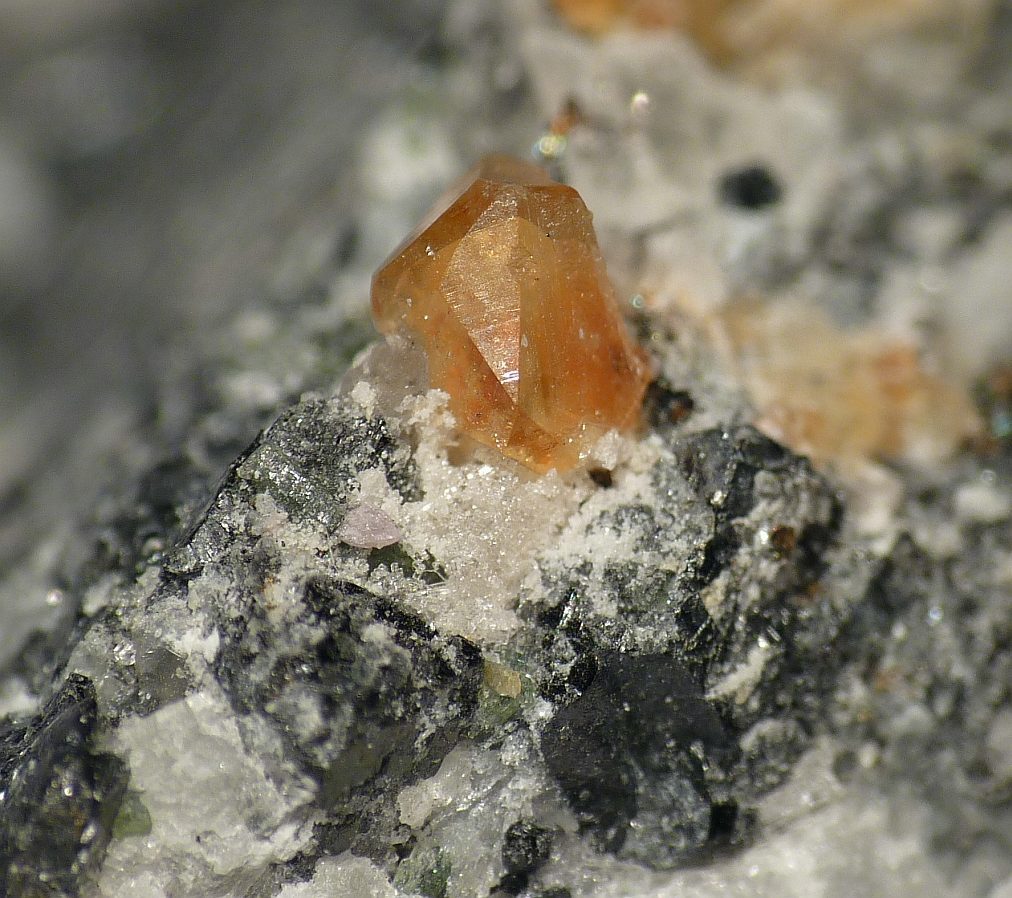
What is Quintinite?
Quintinite is a carbonate mineral with the chemical formula Mg4Al2(OH)12CO3⋅3H2O. The mineral was named after Quinitin Wight of Ottawa, Ontario, Canada (b. 1935), who was a significant contributor to mineral studies at Mont Saint-Hilaire. Quintinite is found as 2H and 3T, or 2-hexagonal and 3-trigonal, polytypes, which were originally approved as separate species, but have not been considered species since 1998. These hexagonal and trigonal forms of quintinite are both from the hexagonal crystal systems, meaning they both have similar lengths of their crystal axes and the same angles between these axes. As a hexagonal mineral, quintinite has three axes of equal length at 60 degree angles to one another and a c axis perpendicular to these three axes of a different length. 2H occurs in carbonatite at Jacupiranga, São Paulo, Brazil, in the Jacupiranga mine and 3T occurs with minerals like gonnardite and donnayite. Both polytypes occur in hydrothermal vents in alkaline rocks. Herg (1977) interpreted the Jacupiranga area as related to a hotspot. The 3T polytype was originally found in the Poudrette quarry at Mont Saint-Hilaire, which is a rare alkaline intrusive complex. The 2H polytype is pleochroic, meaning that the mineral changes colors (in this case yellow and light yellow) when viewed at different angles under a polarizing petrographic microscope. The 3T polytype, however, is not commonly pleochroic but can show green pleochroism if it is high in iron. The 3T polytype has a positive index of refraction whereas the 2H polytype can possess crystals with either a positive or a negative index of refraction.
Market Value Factors
Pricing varies for every rock and mineral, so use these universal factors to gauge Quintinite before comparing listings or appraisals.
Size & Weight
Larger, intact specimens usually command higher prices.
Rarity & Demand
Scarce material or popular varieties sell at a premium.
Condition & Finish
Chips, repairs, and heavy wear lower value; clean prep helps.
Treatment & Provenance
Untreated specimens with documented locality are prized.
Quintinite Localities Map
See where Quintinite is found with a localities map, collecting zones, and geology context. Generate a sample map preview below.
Quick Facts
Physical Properties
- Color
- Yellow to colorless, orange-brown
- Hardness (Mohs)
- 2
Chemical Properties
- Chemical Formula
- Mg4Al2(OH)12(CO3) · 3H2O
- Elements
- Al, C, H, Mg, O
Identify Quintinite Instantly
- Snap a photo, get instant results
- 6,700+ rocks, minerals & crystals
- Discover collecting spots near you
Quintinite FAQs
How do I identify Quintinite?
Quintinite can be identified by its hardness of 2 on the Mohs scale, Yellow to colorless color. Look for these key characteristics when examining specimens.
What color is Quintinite?
Quintinite typically appears in Yellow to colorless, orange-brown. Color can vary depending on impurities and formation conditions.
How hard is Quintinite?
Quintinite has a hardness of 2 on the Mohs scale. This makes it a soft mineral that can be scratched easily.

%252FAbenakiite-(ce)-01.jpg&size=small)

