Mackinawite
A variety of Minerals

What is Mackinawite?
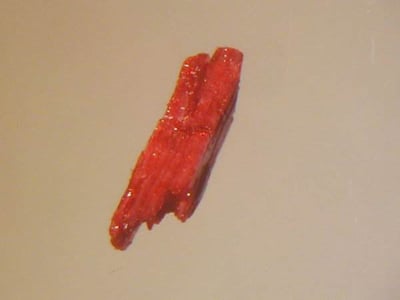
Mackinawite is an iron nickel sulfide mineral with formula (Fe,Ni)1 + xS (where x = 0 to 0.11). The mineral crystallizes in the tetragonal crystal system and has been described as a distorted, close packed, cubic array of S atoms with some of the gaps filled with Fe. Mackinawite occurs as opaque bronze to grey-white tabular crystals and anhedral masses. It has a Mohs hardness of 2.5 and a specific gravity of 4.17. It was first described in 1962 for an occurrence in the Mackinaw mine, Snohomish County, Washington for which it was named.
Market Value Factors
Pricing varies for every rock and mineral, so use these universal factors to gauge Mackinawite before comparing listings or appraisals.
Size & Weight
Larger, intact specimens usually command higher prices.
Rarity & Demand
Scarce material or popular varieties sell at a premium.
Condition & Finish
Chips, repairs, and heavy wear lower value; clean prep helps.
Treatment & Provenance
Untreated specimens with documented locality are prized.
Mackinawite Localities Map
See where Mackinawite is found with a localities map, collecting zones, and geology context. Generate a sample map preview below.
Key Characteristics
Formation of Mackinawite
Mackinawite occurs in serpentinized peridotites as a hydrothermal alteration product, in meteorites, and in association with chalcopyrite, cubanite, pentlandite, pyrrhotite, greigite, maucherite, and troilite. Mackinawite also occurs in reducing environments such as freshwater and marine sediments as a result of the metabolism of iron and sulfate-reducing bacteria. In anoxic environments, mackinawite is formed by the reaction of HS with either Fe ions or with Fe metal. Mackinawite is a metastable mineral that occurs predominantly as a poorly crystalline precipitate. After the initiation of precipitation, mackinawite can take up to 2 years to form at 25 °C. It has been reported that mackinawite can be stable for up to 16 weeks at temperatures up to 100 °C at pH values from 3-12. Laboratories have also produced synthetic mackinawite to study its formation using several different methods such as reacting sulfide with metallic iron or a solution of ferrous iron, growing sulfide reducing bacteria using Fe, and electrochemically.
Quick Facts
Physical Properties
- Color
- Bronzy
- Hardness (Mohs)
- 2.5
- Density
- 4.17 g/cm³
- Streak
- Black
Chemical Properties
- Chemical Formula
- (Fe,Ni)9S8 Also given as (Fe,Ni)1+xS (x = 0 to 0.11).
- Elements
- Fe, Ni, S
Also Known As

Identify Mackinawite Instantly
- Snap a photo, get instant results
- 6,700+ rocks, minerals & crystals
- Discover collecting spots near you
Mackinawite FAQs
How do I identify Mackinawite?
Mackinawite can be identified by its hardness of 2.5 on the Mohs scale, Bronzy color. Look for these key characteristics when examining specimens.
What color is Mackinawite?
Mackinawite typically appears in Bronzy. Color can vary depending on impurities and formation conditions.
How hard is Mackinawite?
Mackinawite has a hardness of 2.5 on the Mohs scale. This makes it a soft mineral that can be scratched easily.
What is the formation of mackinawite of Mackinawite?
Mackinawite occurs in serpentinized peridotites as a hydrothermal alteration product, in meteorites, and in association with chalcopyrite, cubanite, pentlandite, pyrrhotite, greigite, maucherite, and troilite. Mackinawite also occurs in reducing environments such as freshwater and marine sediments as a result of the metabolism of iron and sulfate-reducing bacteria. In anoxic environments, mackinawite is formed by the reaction of HS with either Fe ions or with Fe metal. Mackinawite is a metastable mineral that occurs predominantly as a poorly crystalline precipitate. After the initiation of precipitation, mackinawite can take up to 2 years to form at 25 °C. It has been reported that mackinawite can be stable for up to 16 weeks at temperatures up to 100 °C at pH values from 3-12. Laboratories have also produced synthetic mackinawite to study its formation using several different methods such as reacting sulfide with metallic iron or a solution of ferrous iron, growing sulfide reducing bacteria using Fe, and electrochemically.

%252FAbenakiite-(ce)-01.jpg&size=small)

