Gormanite
A variety of Minerals
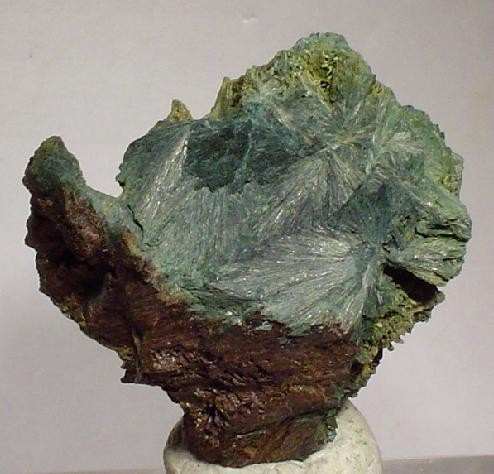
What is Gormanite?
Gormanite is a phosphate mineral with the formula (Fe,Mg)3Al4(PO4)4(OH)6·2H2O. It was named after the University of Toronto professor Donald Herbert Gorman (1922-2020).
Market Value Factors
Pricing varies for every rock and mineral, so use these universal factors to gauge Gormanite before comparing listings or appraisals.
Size & Weight
Larger, intact specimens usually command higher prices.
Rarity & Demand
Scarce material or popular varieties sell at a premium.
Condition & Finish
Chips, repairs, and heavy wear lower value; clean prep helps.
Treatment & Provenance
Untreated specimens with documented locality are prized.
Gormanite Localities Map
See where Gormanite is found with a localities map, collecting zones, and geology context. Generate a sample map preview below.
Key Characteristics
Formation of Gormanite
It was first described in 1981 for occurrences in Rapid Creek and Big Fish River in the Dawson Mining District, Yukon Territory, Canada. At the type localities it occurs as veins in iron phosphate nodules. In the Bisbee, Arizona occurrence, it occurs as large crystals within fractures in a tonalite intrusive. It has also been reported from near Newport, Sullivan County, New Hampshire, and the Charles Davis pegmatite, Groton, Grafton County, New Hampshire. It also has been reported from the Tsaobismund pegmatite, south of Karibib, Namibia.
Quick Facts
Physical Properties
- Color
- Blue green to dark green
- Hardness (Mohs)
- 4 - 5
- Density
- 3.12 g/cm³
- Streak
- Pale green
Chemical Properties
- Chemical Formula
- (Fe2+,Mg)3(Al,Fe3+)4(PO4)4(OH)6 · 2H2O
- Elements
- Al, Fe, H, O, P
Identify Gormanite Instantly
- Snap a photo, get instant results
- 6,700+ rocks, minerals & crystals
- Discover collecting spots near you
Gormanite FAQs
How do I identify Gormanite?
Gormanite can be identified by its hardness of 4 - 5 on the Mohs scale, Blue green to dark green color. Look for these key characteristics when examining specimens.
What color is Gormanite?
Gormanite typically appears in Blue green to dark green. Color can vary depending on impurities and formation conditions.
How hard is Gormanite?
Gormanite has a hardness of 4 - 5 on the Mohs scale. This gives it moderate hardness.
What is the formation of gormanite of Gormanite?
It was first described in 1981 for occurrences in Rapid Creek and Big Fish River in the Dawson Mining District, Yukon Territory, Canada. At the type localities it occurs as veins in iron phosphate nodules. In the Bisbee, Arizona occurrence, it occurs as large crystals within fractures in a tonalite intrusive. It has also been reported from near Newport, Sullivan County, New Hampshire, and the Charles Davis pegmatite, Groton, Grafton County, New Hampshire. It also has been reported from the Tsaobismund pegmatite, south of Karibib, Namibia.

%252FAbenakiite-(ce)-01.jpg&size=small)

