Ferrihydrite
A variety of Minerals
What is Ferrihydrite?
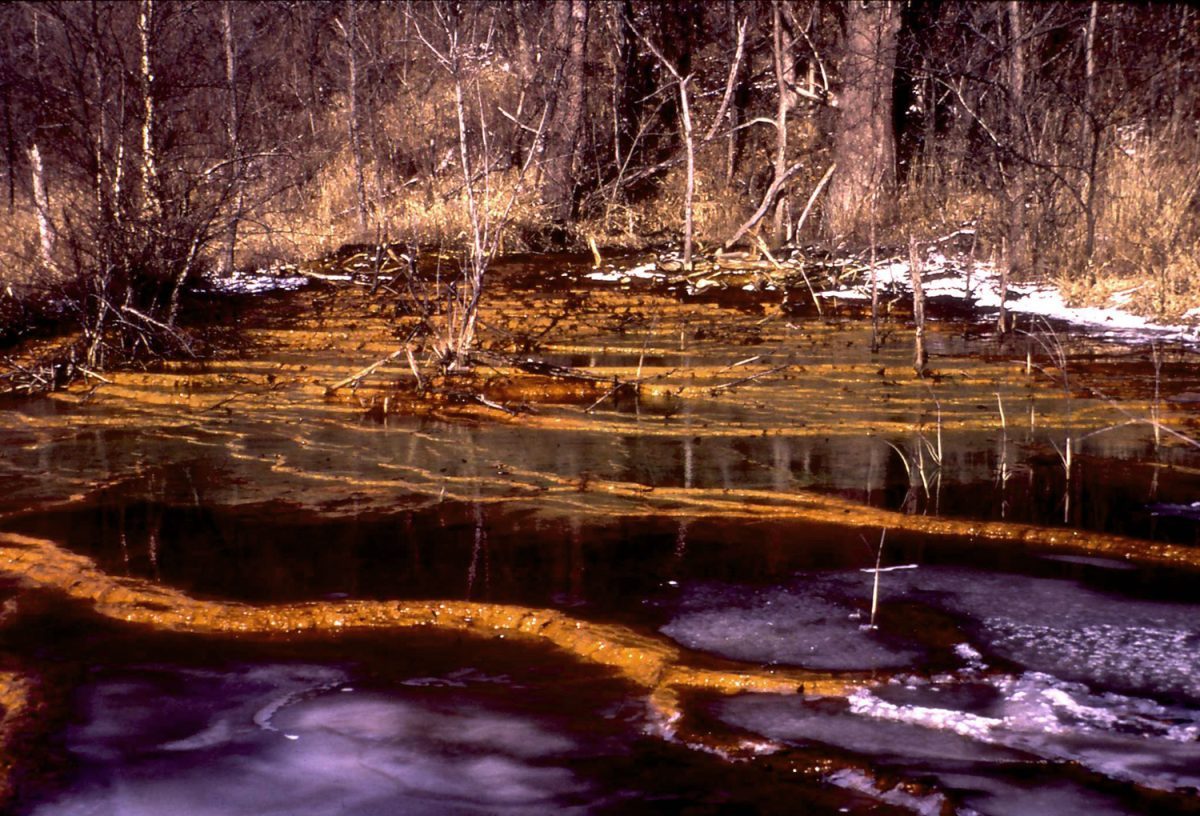
Ferrihydrite (Fh) is a widespread hydrous ferric oxyhydroxide mineral at the Earth's surface, and a likely constituent in extraterrestrial materials. It forms in several types of environments, from freshwater to marine systems, aquifers to hydrothermal hot springs and scales, soils, and areas affected by mining. It can be precipitated directly from oxygenated iron-rich aqueous solutions, or by bacteria either as a result of a metabolic activity or passive sorption of dissolved iron followed by nucleation reactions. Ferrihydrite also occurs in the core of the ferritin protein from many living organisms, for the purpose of intra-cellular iron storage.
Market Value Factors
Pricing varies for every rock and mineral, so use these universal factors to gauge Ferrihydrite before comparing listings or appraisals.
Size & Weight
Larger, intact specimens usually command higher prices.
Rarity & Demand
Scarce material or popular varieties sell at a premium.
Condition & Finish
Chips, repairs, and heavy wear lower value; clean prep helps.
Treatment & Provenance
Untreated specimens with documented locality are prized.
Ferrihydrite Localities Map
See where Ferrihydrite is found with a localities map, collecting zones, and geology context. Generate a sample map preview below.
Key Characteristics
Composition of Ferrihydrite
Ferrihydrite only exists as a fine grained and highly defective nanomaterial. The powder X-ray diffraction pattern of Fh contains two scattering bands in its most disordered state, and a maximum of six strong lines in its most crystalline state. The principal difference between these two diffraction end-members, commonly named two-line and six-line ferrihydrites, is the size of the constitutive crystallites. The six-line form has been classified as a mineral by the IMA in 1973 with the nominal chemical formula 5Fe2O3•9H2O. Other proposed formulas were Fe5HO8•4H2O and Fe2O3•2FeO(OH)•2.6H2O. However, its formula is fundamentally indeterminate as its water content is variable. The two-line form is also called hydrous ferric oxides (HFO). Due to the nanoparticulate nature of ferrihydrite, the structure has remained elusive for many years and is still a matter of controversy. Drits et al., using X-ray diffraction data, proposed a multiphase material with three components: defect-free crystallites (f-phase) with double-hexagonal stacking of oxygen and hydroxyl layers (ABAC sequence) and disordered octahedral Fe occupancies, defective crystallites (d-phase) with a short-range feroxyhite-like (δ-FeOOH) structure, and subordinate ultradisperse hematite (α-Fe2O3). Recently, a new single phase model for both ferrihydrite and hydromaghemite has been proposed by Michel et al., based on pair distribution function (PDF) analysis of x-ray total scattering data. The structural model, isostructural with the mineral akdalaite (Al10O14(OH)2), contains 20% tetrahedrally and 80% octahedrally coordinated iron.
More Images

Quick Facts
Physical Properties
- Color
- dark brown, yellow-brown
- Density
- 3.96 g/cm³
- Streak
- yellow-brown
Chemical Properties
- Chemical Formula
- Fe3+10O14(OH)2 Previously given as Fe3+5O3(OH)9.
- Elements
- Fe, H, O
Identify Ferrihydrite Instantly
- Snap a photo, get instant results
- 6,700+ rocks, minerals & crystals
- Discover collecting spots near you
Ferrihydrite FAQs
How do I identify Ferrihydrite?
Ferrihydrite can be identified by its dark brown color. Look for these key characteristics when examining specimens.
What color is Ferrihydrite?
Ferrihydrite typically appears in dark brown, yellow-brown. Color can vary depending on impurities and formation conditions.
What is the composition of ferrihydrite of Ferrihydrite?
Ferrihydrite only exists as a fine grained and highly defective nanomaterial. The powder X-ray diffraction pattern of Fh contains two scattering bands in its most disordered state, and a maximum of six strong lines in its most crystalline state. The principal difference between these two diffraction end-members, commonly named two-line and six-line ferrihydrites, is the size of the constitutive crystallites. The six-line form has been classified as a mineral by the IMA in 1973 with the nominal chemical formula 5Fe2O3•9H2O. Other proposed formulas were Fe5HO8•4H2O and Fe2O3•2FeO(OH)•2.6H2O. However, its formula is fundamentally indeterminate as its water content is variable. The two-line form is also called hydrous ferric oxides (HFO). Due to the nanoparticulate nature of ferrihydrite, the structure has remained elusive for many years and is still a matter of controversy. Drits et al., using X-ray diffraction data, proposed a multiphase material with three components: defect-free crystallites (f-phase) with double-hexagonal stacking of oxygen and hydroxyl layers (ABAC sequence) and disordered octahedral Fe occupancies, defective crystallites (d-phase) with a short-range feroxyhite-like (δ-FeOOH) structure, and subordinate ultradisperse hematite (α-Fe2O3). Recently, a new single phase model for both ferrihydrite and hydromaghemite has been proposed by Michel et al., based on pair distribution function (PDF) analysis of x-ray total scattering data. The structural model, isostructural with the mineral akdalaite (Al10O14(OH)2), contains 20% tetrahedrally and 80% octahedrally coordinated iron.

%252FAbenakiite-(ce)-01.jpg&size=small)

