Cuspidine
A variety of Minerals

What is Cuspidine?
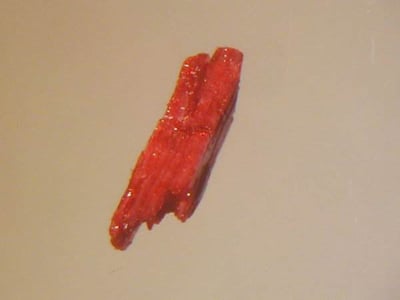
Cuspidine is a fluorine bearing calcium silicate mineral (sorosilicate) with formula: Ca4(Si2O7)(F,OH)2. Cuspidine crystallizes in the monoclinic crystal system and occurs as acicular to spear shaped pale red to light brown crystals. It is a member of the wöhlerite group. Cuspidine was first described in 1876 for an occurrence in Monte Somma, Italy. The name is from the Greek cuspis for spear from its characteristic crystal form. Cuspidine occurs as crystals in tuff from Monte Somma. In the Franklin, New Jersey mine area it occurs in contact metamorphosed limestone. In Dupezeh Mountain, Iraq, it occurs in melilite bearing skarn. Associated minerals include augite, hornblende, diopside, grossular, biotite, phlogopite, monticellite, wollastonite, calcite, spinel, magnetite and perovskite.
Market Value Factors
Pricing varies for every rock and mineral, so use these universal factors to gauge Cuspidine before comparing listings or appraisals.
Size & Weight
Larger, intact specimens usually command higher prices.
Rarity & Demand
Scarce material or popular varieties sell at a premium.
Condition & Finish
Chips, repairs, and heavy wear lower value; clean prep helps.
Treatment & Provenance
Untreated specimens with documented locality are prized.
Cuspidine Localities Map
See where Cuspidine is found with a localities map, collecting zones, and geology context. Generate a sample map preview below.
Quick Facts
Physical Properties
- Color
- Colorless, tan, light brown, pale red.
- Hardness (Mohs)
- 5 - 6
- Density
- 2.98 g/cm³
- Streak
- White
Chemical Properties
- Chemical Formula
- Ca4(Si2O7)(F,OH)2
- Elements
- Ca, F, H, O, Si
Identify Cuspidine Instantly
- Snap a photo, get instant results
- 6,700+ rocks, minerals & crystals
- Discover collecting spots near you
Cuspidine FAQs
How do I identify Cuspidine?
Cuspidine can be identified by its hardness of 5 - 6 on the Mohs scale, Colorless color. Look for these key characteristics when examining specimens.
What color is Cuspidine?
Cuspidine typically appears in Colorless, tan, light brown, pale red.. Color can vary depending on impurities and formation conditions.
How hard is Cuspidine?
Cuspidine has a hardness of 5 - 6 on the Mohs scale. This gives it moderate hardness.

%252FAbenakiite-(ce)-01.jpg&size=small)

