Charlesite
A variety of Minerals
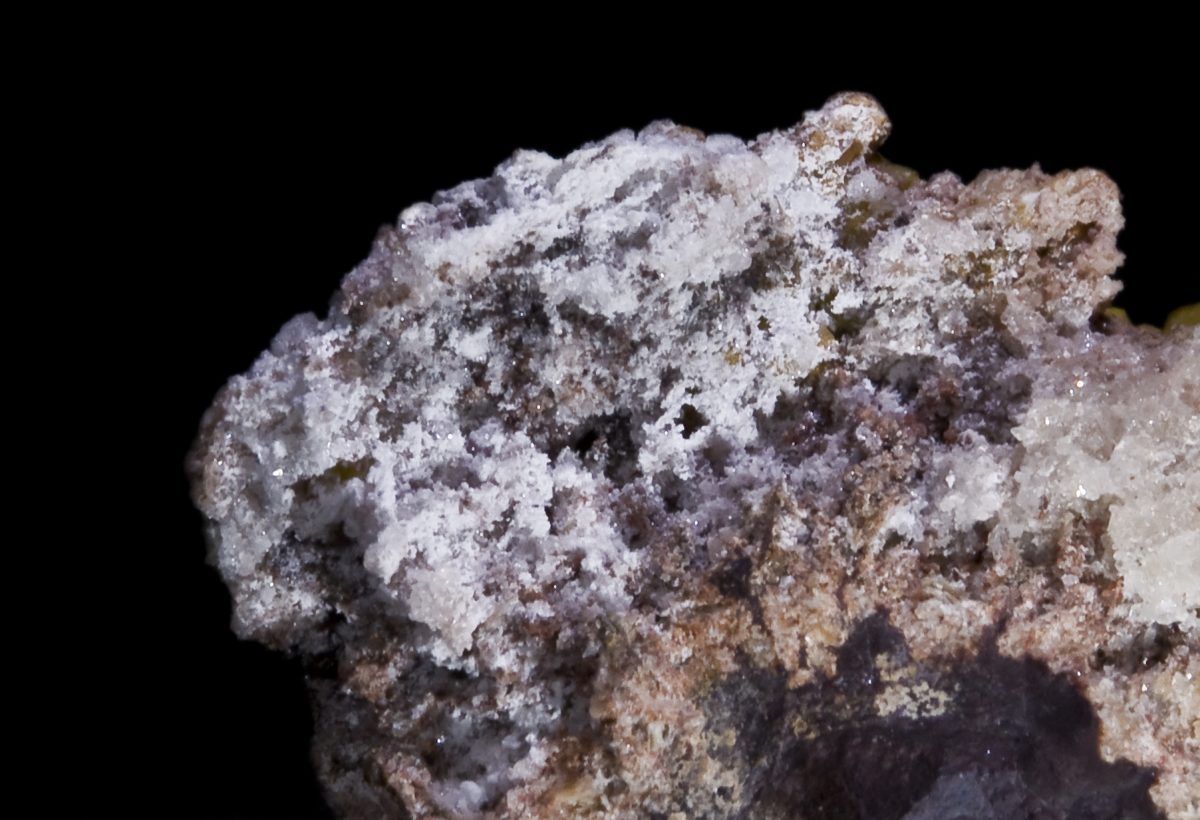
What is Charlesite?
Charlesite is a sulfate mineral of the ettringite group. Charlesite was named in 1945 after Dr. Charles Palache mineralogist and professor at Harvard University for his work on minerals. This mineral is extremely rare, and when it is found it is often in crystal (but not gem) form. Its crystals are soft hexagonal, that can vary in color. Colors can range from clear to white, or even a pale yellow or pink. The brittle mineral's Mohs hardness is 2.5 with a specific gravity of 1.79. Though transparent to the eye the mineral has a white streak.
Uses & Applications
Due to its rarity, there are not very many uses for charlesite. Though there is not much of the mineral, one of the major uses for the ones that reach the standards is gems. Due to its softness it will not be found in much jewelry. Some other uses could be for studying (the reasons for the rarity of the mineral), teaching mineralogy classes, or even items for collectors or museums of rare minerals.
Market Value Factors
Pricing varies for every rock and mineral, so use these universal factors to gauge Charlesite before comparing listings or appraisals.
Size & Weight
Larger, intact specimens usually command higher prices.
Rarity & Demand
Scarce material or popular varieties sell at a premium.
Condition & Finish
Chips, repairs, and heavy wear lower value; clean prep helps.
Treatment & Provenance
Untreated specimens with documented locality are prized.
Charlesite Localities Map
See where Charlesite is found with a localities map, collecting zones, and geology context. Generate a sample map preview below.
Key Characteristics
Formation of Charlesite
Charlesite has only been found in a few specific locations in the world. The first was its place of discovery in Franklin Mine in Franklin, Sussex County, New Jersey. It was located immediately above the 800 level, about 15 feet into the ore from the hanging wall. The ore mostly consisted of franklinite and willemite and several other minor minerals. The crystals found at this location were up to 6mm in length and were suspected to have grown alongside clinohedrite crystals. The other location where charlesite has been located is the Wessel's Mine, N' Chwaning Mines, and Kalahari Manganese Fields in Northern Cape Province, South Africa. The Wessel's Mine is thought to be the only source for charlesite to be found in gem quality. Several of the other recorded places are Germany, Japan, Norway, Romania, and Slovakia.
Quick Facts
Physical Properties
- Color
- Colorless, white
- Hardness (Mohs)
- 2.5
- Density
- 1.79 g/cm³
- Streak
- White
Chemical Properties
- Chemical Formula
- Ca6(Al,Si)2(SO4)2B(OH)412 · 26H2O
- Elements
- Al, B, Ca, H, O, S, Si
Identify Charlesite Instantly
- Snap a photo, get instant results
- 6,700+ rocks, minerals & crystals
- Discover collecting spots near you
Charlesite FAQs
How do I identify Charlesite?
Charlesite can be identified by its hardness of 2.5 on the Mohs scale, Colorless color. Look for these key characteristics when examining specimens.
What color is Charlesite?
Charlesite typically appears in Colorless, white. Color can vary depending on impurities and formation conditions.
How hard is Charlesite?
Charlesite has a hardness of 2.5 on the Mohs scale. This makes it a soft mineral that can be scratched easily.
What is the formation of charlesite of Charlesite?
Charlesite has only been found in a few specific locations in the world. The first was its place of discovery in Franklin Mine in Franklin, Sussex County, New Jersey. It was located immediately above the 800 level, about 15 feet into the ore from the hanging wall. The ore mostly consisted of franklinite and willemite and several other minor minerals. The crystals found at this location were up to 6mm in length and were suspected to have grown alongside clinohedrite crystals. The other location where charlesite has been located is the Wessel's Mine, N' Chwaning Mines, and Kalahari Manganese Fields in Northern Cape Province, South Africa. The Wessel's Mine is thought to be the only source for charlesite to be found in gem quality. Several of the other recorded places are Germany, Japan, Norway, Romania, and Slovakia.

%252FAbenakiite-(ce)-01.jpg&size=small)

