Bukovskyite
A variety of Minerals
What is Bukovskyite?
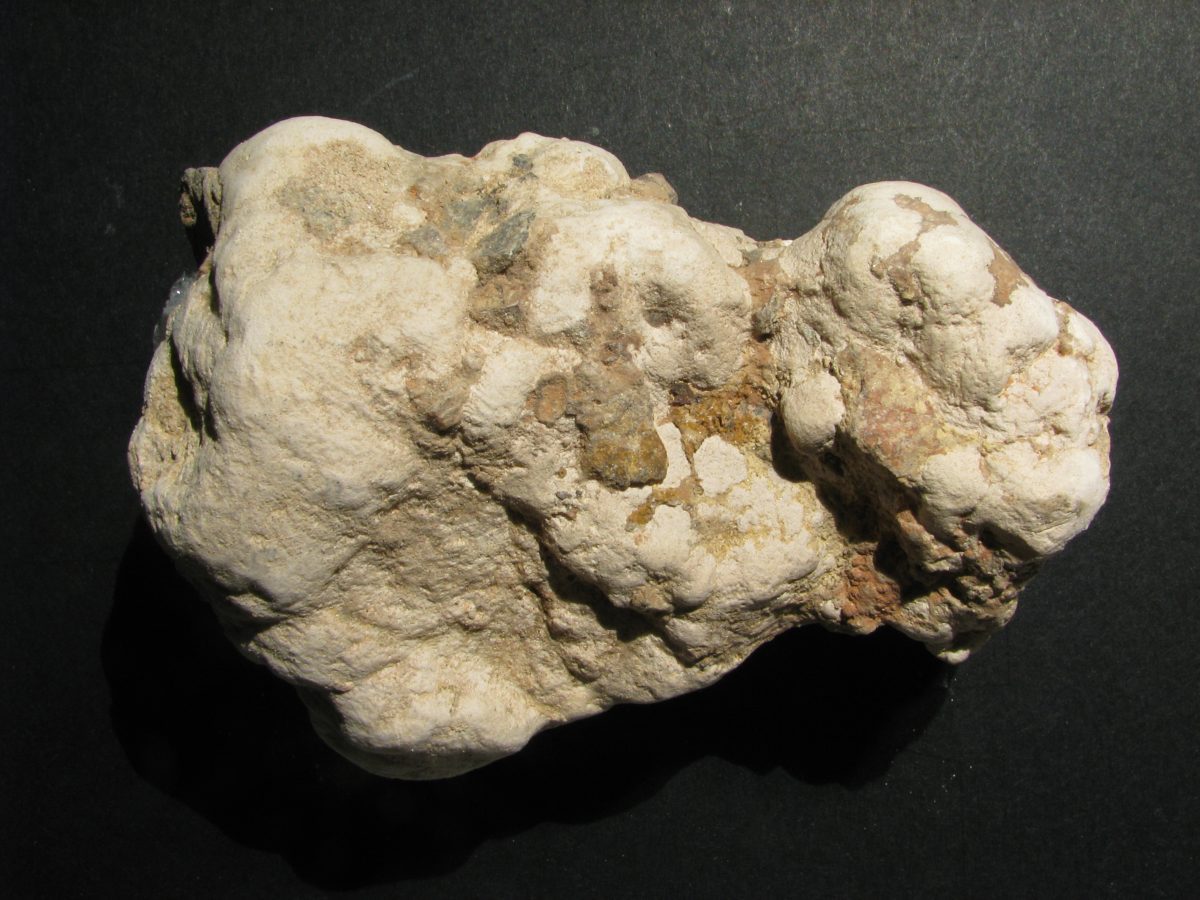
Bukovskyite (also known as "clay of Kutná Hora") is an iron arsenate sulfate mineral with formula: Fe2(AsO4)(SO4)(OH)·7H2O which forms nodules with a reniform (kidney-shaped) surface. Under a microscope, these nodules appear as a collection of minute needles similar to gypsum. Some can be seen with the naked eye and occur inside the nodules. Bukovskyite was first described from pit heaps from the Middle Ages, where sulfate ores had been mined at Kank, north of Kutná Hora in Bohemia, Czech Republic, and other old deposits in the vicinity. Only recently defined and acknowledged, it was approved by the IMA in 1969. Bukovskyite was collected a long time ago from the overgrown pit heaps by the inhabitants of Kutná Hora. It was used for poisoning fieldmice and other field vermin. This poisonous clay, known also by the place name as "clay of Kutná Hora"', was widely known and it was considered to be 'arsenic' (arsenic trioxide). In 1901 Antonín Bukovský (1865–1950), a Czech chemist, who studied minerals of old pit heaps, proved it was an arsenate.
Market Value Factors
Pricing varies for every rock and mineral, so use these universal factors to gauge Bukovskyite before comparing listings or appraisals.
Size & Weight
Larger, intact specimens usually command higher prices.
Rarity & Demand
Scarce material or popular varieties sell at a premium.
Condition & Finish
Chips, repairs, and heavy wear lower value; clean prep helps.
Treatment & Provenance
Untreated specimens with documented locality are prized.
Bukovskyite Localities Map
See where Bukovskyite is found with a localities map, collecting zones, and geology context. Generate a sample map preview below.
Quick Facts
Physical Properties
- Hardness (Mohs)
- 5
Chemical Properties
- Chemical Formula
- Fe3+2(AsO4)(SO4)(OH) · 9H2O
- Elements
- As, Fe, H, O, S
Identify Bukovskyite Instantly
- Snap a photo, get instant results
- 6,700+ rocks, minerals & crystals
- Discover collecting spots near you
Bukovskyite FAQs
How do I identify Bukovskyite?
Bukovskyite can be identified by its hardness of 5 on the Mohs scale. Look for these key characteristics when examining specimens.
How hard is Bukovskyite?
Bukovskyite has a hardness of 5 on the Mohs scale. This gives it moderate hardness.

%252FAbenakiite-(ce)-01.jpg&size=small)

