Arthurite
A variety of Minerals
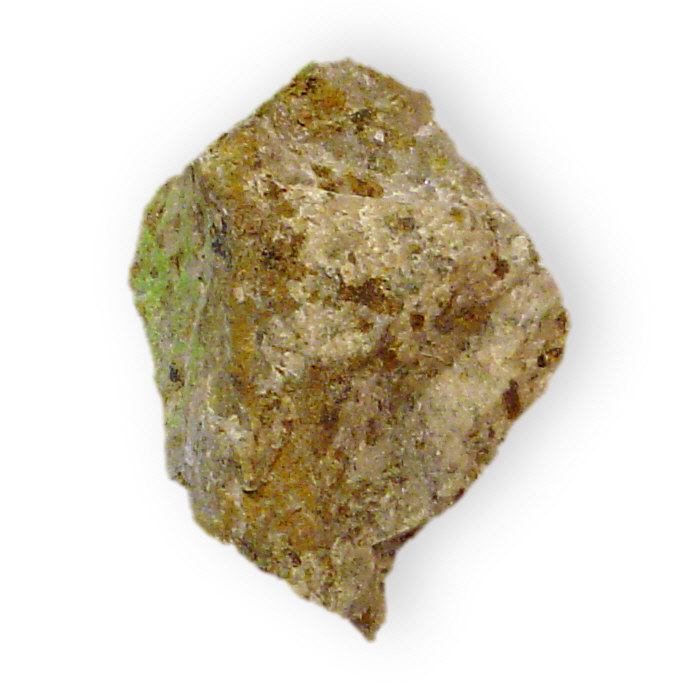
What is Arthurite?
Arthurite is a mineral composed of divalent copper and iron ions in combination with trivalent arsenate, phosphate and sulfate ions with hydrogen and oxygen. Initially discovered by Sir Arthur Russell in 1954 at Hingston Down Consols mine in Calstock, Cornwall, England, arthurite is formed as a resultant mineral in the oxidation region of some copper deposits by the variation of enargite or arsenopyrite. The chemical formula of Arthurite is CuFe2(AsO4,PO4,SO4)2(O,OH)2•4H2O. Arthurite is named after Arthur W. G. Kingsbury (1906–1968), a British mineralogist, and Sir Arthur Russell (1878–1964), a collector of minerals.
Market Value Factors
Pricing varies for every rock and mineral, so use these universal factors to gauge Arthurite before comparing listings or appraisals.
Size & Weight
Larger, intact specimens usually command higher prices.
Rarity & Demand
Scarce material or popular varieties sell at a premium.
Condition & Finish
Chips, repairs, and heavy wear lower value; clean prep helps.
Treatment & Provenance
Untreated specimens with documented locality are prized.
Arthurite Localities Map
See where Arthurite is found with a localities map, collecting zones, and geology context. Generate a sample map preview below.
Key Characteristics
Characteristics of Arthurite
Table 3. General and Physical Properties of arthurite
Composition of Arthurite
The theoretical chemical formula of Arthurite was originally determined to be Cu2Fe4(AsO4)3(O,OH)7•6H2O. The breakdown of the composition of arthurite in weight percent oxides is given in Table 1. Table 1. Chemical composition of Arthurite in weight percent oxides Arthurite crystallizes from an aqueous solution with whichever applicable anions are accessible in the solution. These available anions may be carbonate, arsenate, sulphate and phosphate. Some other minerals belonging to the arthurite group are cobaltarthurite, CoFe2(AsO4)2(OH)2•4H2O, whitmoreite FeFe2(PO4)2(OH)2•4H2O, ojuelaite, ZnFe2(AsO4)2(OH)2•4H2O, earlshannonite, (Mn,Fe)Fe2(PO4)2(OH)2•4H2O and bendadaite, FeFe2(AsO4)2(OH)2•4H2O. The optimal compositions of the members of the arthurite group can be represented by AFe2(XO4)2(OH)2•4H2O and are summarized in Table 2. Table 2. Compositional breakdown of the arthurite group members
Quick Facts
Physical Properties
- Color
- Apple-green, emerald-green, pale olive-green.
- Hardness (Mohs)
- 3 - 4
- Streak
- (not reported)
Chemical Properties
- Chemical Formula
- CuFe3+2(AsO4)2(OH)2 · 4H2O
- Elements
- As, Cu, Fe, H, O
Identify Arthurite Instantly
- Snap a photo, get instant results
- 6,700+ rocks, minerals & crystals
- Discover collecting spots near you
Arthurite FAQs
How do I identify Arthurite?
Arthurite can be identified by its hardness of 3 - 4 on the Mohs scale, Apple-green color. Look for these key characteristics when examining specimens.
What color is Arthurite?
Arthurite typically appears in Apple-green, emerald-green, pale olive-green.. Color can vary depending on impurities and formation conditions.
How hard is Arthurite?
Arthurite has a hardness of 3 - 4 on the Mohs scale. This makes it a soft mineral that can be scratched easily.
What is the characteristics of arthurite of Arthurite?
Table 3. General and Physical Properties of arthurite
What is the composition of arthurite of Arthurite?
The theoretical chemical formula of Arthurite was originally determined to be Cu2Fe4(AsO4)3(O,OH)7•6H2O. The breakdown of the composition of arthurite in weight percent oxides is given in Table 1. Table 1. Chemical composition of Arthurite in weight percent oxides Arthurite crystallizes from an aqueous solution with whichever applicable anions are accessible in the solution. These available anions may be carbonate, arsenate, sulphate and phosphate. Some other minerals belonging to the arthurite group are cobaltarthurite, CoFe2(AsO4)2(OH)2•4H2O, whitmoreite FeFe2(PO4)2(OH)2•4H2O, ojuelaite, ZnFe2(AsO4)2(OH)2•4H2O, earlshannonite, (Mn,Fe)Fe2(PO4)2(OH)2•4H2O and bendadaite, FeFe2(AsO4)2(OH)2•4H2O. The optimal compositions of the members of the arthurite group can be represented by AFe2(XO4)2(OH)2•4H2O and are summarized in Table 2. Table 2. Compositional breakdown of the arthurite group members

%252FAbenakiite-(ce)-01.jpg&size=small)

