Apatite
A variety of Minerals

What is Apatite?
Apatite is a group of phosphate minerals, usually referring to hydroxyapatite, fluorapatite and chlorapatite, with high concentrations of OH, F and Cl ions, respectively, in the crystal. The formula of the admixture of the three most common endmembers is written as Ca10(PO4)6(OH,F,Cl)2, and the crystal unit cell formulae of the individual minerals are written as Ca10(PO4)6(OH)2, Ca10(PO4)6F2 and Ca10(PO4)6Cl2. The mineral was named apatite by the German geologist Abraham Gottlob Werner in 1786, although the specific mineral he had described was reclassified as fluorapatite in 1860 by the German mineralogist Karl Friedrich August Rammelsberg. Apatite is often mistaken for other minerals. This tendency is reflected in the mineral's name, which is derived from the Greek word απατείν (apatein), which means to deceive or to be misleading.
Uses & Applications
The primary use of apatite is in the manufacture of fertilizer – it is a source of phosphorus. It is occasionally used as a gemstone. Green and blue varieties, in finely divided form, are pigments with excellent covering power. During digestion of apatite with sulfuric acid to make phosphoric acid, hydrogen fluoride is produced as a byproduct from any fluorapatite content. This byproduct is a minor industrial source of hydrofluoric acid. Fluoro-chloro apatite forms the basis of the now obsolete Halophosphor fluorescent tube phosphor system. Dopant elements of manganese and antimony, at less than one mole-percent — in place of the calcium and phosphorus impart the fluorescence — and adjustment of the fluorine-to-chlorine ratio alter the shade of white produced. This system has been almost entirely replaced by the Tri-Phosphor system. In the United States, apatite-derived fertilizers are used to supplement the nutrition of many agricultural crops by providing a valuable source of phosphate. Apatites are also a proposed host material for storage of nuclear waste, along with other phosphates.
Optical Properties
- Refractive Index
- 1.629-1.648
- Pleochroism
- Weak to moderate
- Optical Character
- Uniaxial negative
- Dispersion
- 0.013
Discover Values
Market Value Factors
Pricing varies for every rock and mineral, so use these universal factors to gauge Apatite before comparing listings or appraisals.
Size & Weight
Larger, intact specimens usually command higher prices.
Rarity & Demand
Scarce material or popular varieties sell at a premium.
Condition & Finish
Chips, repairs, and heavy wear lower value; clean prep helps.
Treatment & Provenance
Untreated specimens with documented locality are prized.
Apatite Localities Map
See where Apatite is found with a localities map, collecting zones, and geology context. Generate a sample map preview below.
Geochemistry
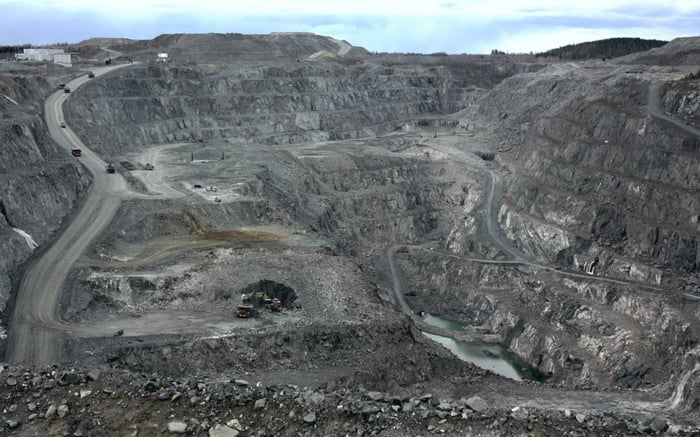
Apatite is found in sedimentary, metamorphic, igneous, and volcanic rocks. Apatite can form in sedimentary processes, igneous processes (e.g., Pegmatite), metamorphic processes, and in hydrothermal vents, as well as production by biological systems. Apatite is one of a few minerals produced and used by biological micro-environmental systems. Apatite is the defining mineral for 5 on the Mohs scale. Hydroxyapatite, also known as hydroxylapatite, is the major component of tooth enamel and bone mineral. A relatively rare form of apatite in which most of the OH groups are absent and containing many carbonate and acid phosphate substitutions is a large component of bone material. Fluorapatite (or fluoroapatite) is more resistant to acid attack than is hydroxyapatite; in the mid-20th century, it was discovered that communities whose water supply naturally contained fluorine had lower rates of dental caries. Fluoridated water allows exchange in the teeth of fluoride ions for hydroxyl groups in apatite. Similarly, toothpaste typically contains a source of fluoride anions (e.g. sodium fluoride, sodium monofluorophosphate). Too much fluoride results in dental fluorosis and/or skeletal fluorosis. Fission tracks in apatite are commonly used to determine the thermal histories of orogenic belts and of sediments in sedimentary basins. (U-Th)/He dating of apatite is also well established from noble gas diffusion studies for use in determining thermal histories and other, less typical applications such as paleo-wildfire dating. Phosphorite is a phosphate-rich sedimentary rock, that contains between 18% and 40% P2O5. The apatite in phosphorite is present as cryptocrystalline masses referred to as collophane.
More Images

Quick Facts
Physical Properties
- Color
- Blue, green, yellow, violet, pink, white, colorless
- Hardness (Mohs)
- 5
- Density
- 3.16-3.22 g/cm³
- Streak
- White
- Luster
- Vitreous to resinous
- Crystal System
- Hexagonal
Chemical Properties
- Chemical Formula
- Ca5(PO4)3(F,Cl,OH)
- Elements
- Ca, P, O, F, Cl, H
Identify Apatite Instantly
- Snap a photo, get instant results
- 6,700+ rocks, minerals & crystals
- Discover collecting spots near you
Apatite FAQs
How do I identify Apatite?
Apatite can be identified by its hardness of 5 on the Mohs scale, Blue color, Vitreous to resinous luster, Hexagonal crystal system. Look for these key characteristics when examining specimens.
What color is Apatite?
Apatite typically appears in Blue, green, yellow, violet, pink, white, colorless. Color can vary depending on impurities and formation conditions.
How hard is Apatite?
Apatite has a hardness of 5 on the Mohs scale. This gives it moderate hardness.

%252FAbenakiite-(ce)-01.jpg&size=small)

